
What is a Drum Circle?: Origins, History and Contemporary Practices
For all the ways modern life keeps us connected through social media, group chats, and video calls, nearly half of all young adults report feeling lonely, according to a new study by researchers at Washington University in St. Louis. We are more digitally reachable than any generation before us, and yet community has become harder to find. But combatting loneliness may be easier than you think. Simply gathering to enjoy music and move your body can reset your nervous system and foster a sense of community. In fact, drum circles are an ancient ritual of celebration, healing, and entertainment that have been uplifting communities for thousands of years. Tapping into the power of music and rhythm helps people move through grief, mark life transitions, build belonging, and restore a sense of wholeness.Whether you are curious about attending your first drum circle, exploring community drumming as a wellness practice, or simply wondering where this ancient tradition originated, this guide walks you through everything you need to know about the past and present of drum circles.
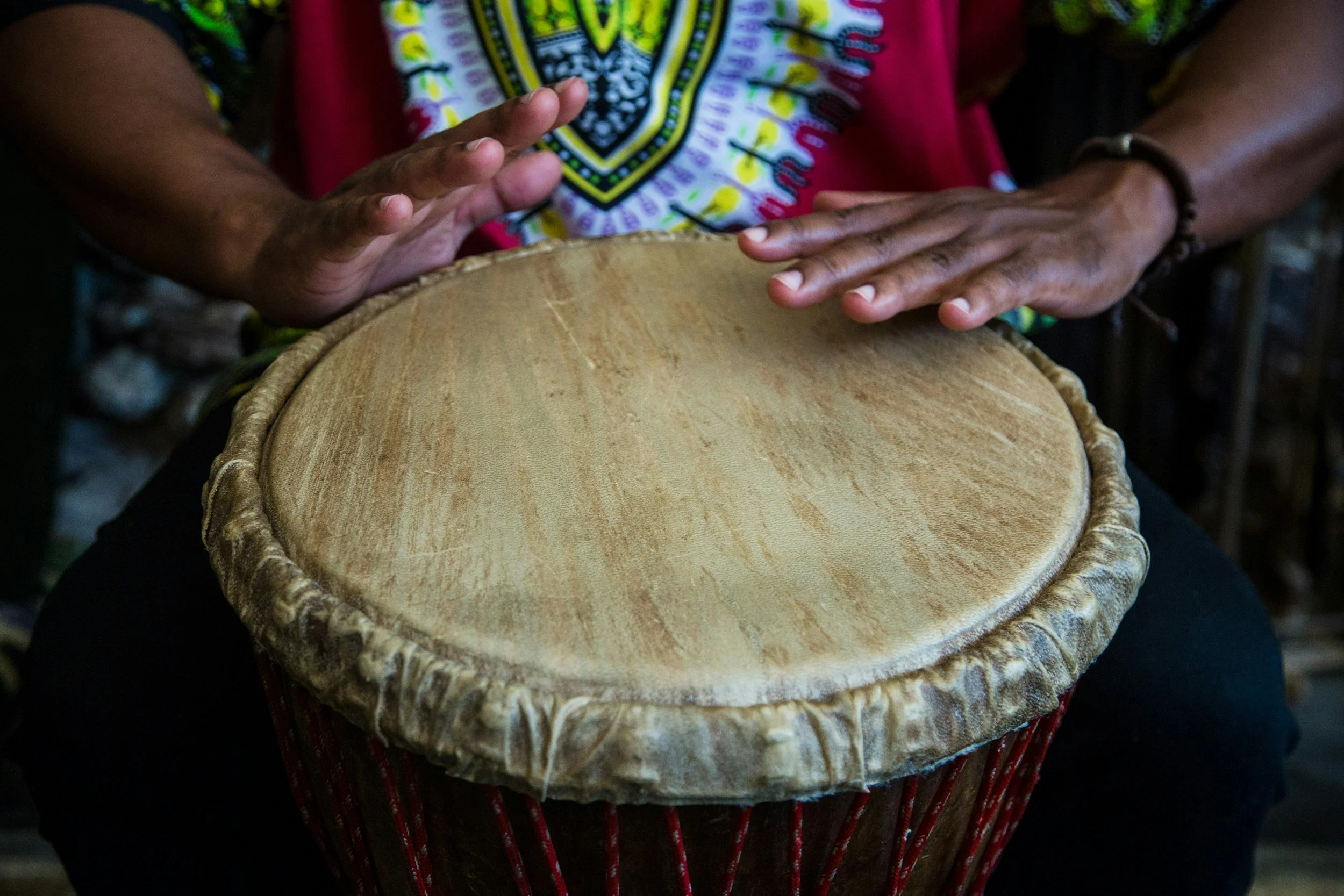
What Happens At a Drum Circle?
A drum circle is a gathering of people who play drums in a shared, often improvisational setting. There is no audience, no wrong way to participate, and no musical experience required. The focus is on creating and feeling the rhythm, being present, expressing yourself, and connecting with one another through sound.In a drum circle, you might encounter djembes (West African hand drums), frame drums, congas, bongos, shakers, rattles, and other percussion instruments. Some circles use a facilitator to guide the rhythm and energy of the group, while others are more free-form, allowing the sound to evolve organically. And many drum circles also welcome dance and other physical movement.
The Ancient Origins of the Drum Circle
The roots of community drumming stretch back thousands of years, woven into the sacred rituals of indigenous cultures around the world. Across ancient Mesopotamia, Egypt, Greece, and the Mediterranean world, the drum was considered more than a musical instrument. It was a sacred technology that connected the human to the divine, the individual to the community, and the body to the spirit. In these traditions, group drumming was used to mark harvests, honor the dead, call in healing, and usher communities through the great transitions of life.
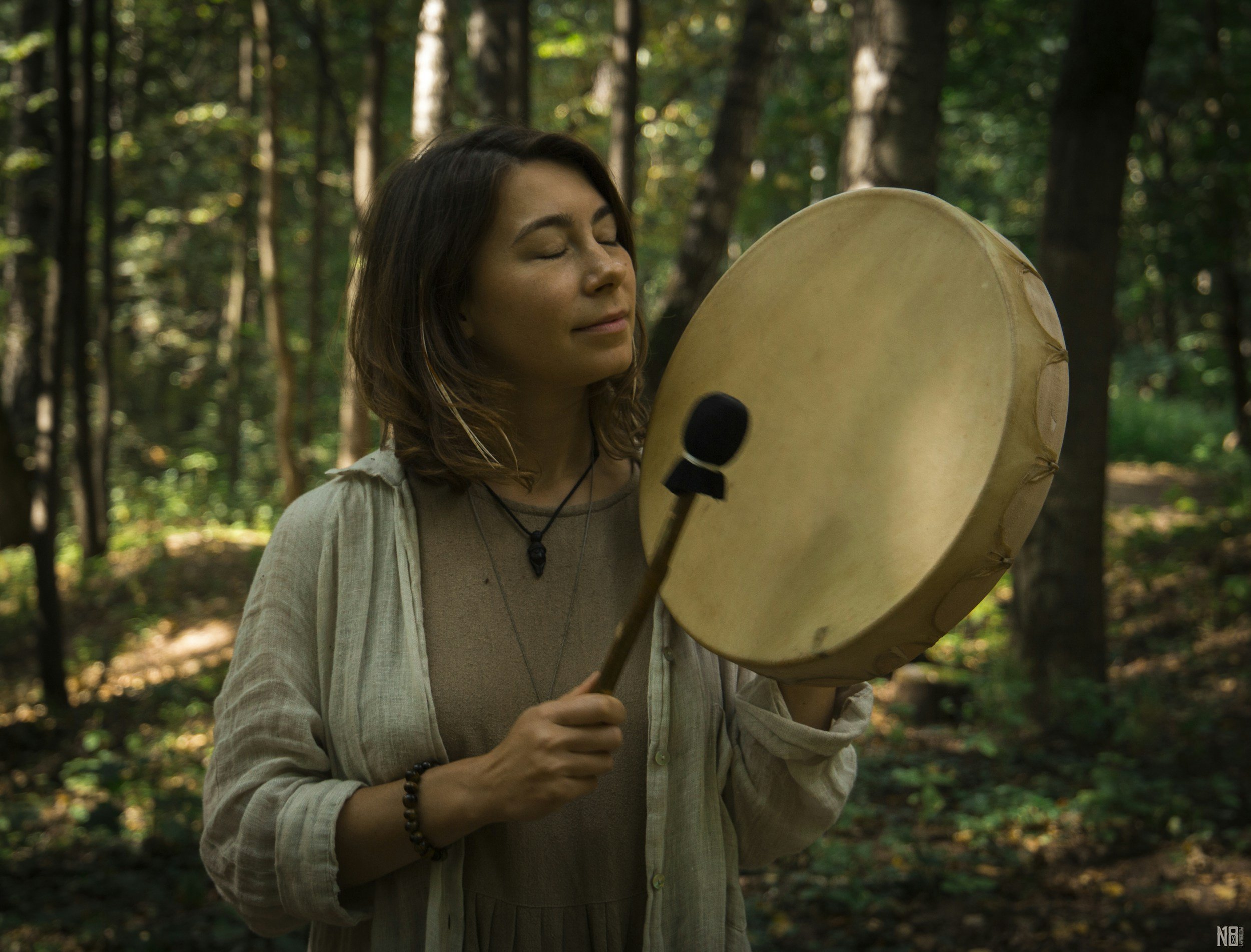
The Female-Driven History of Drum Circles
One of the most fascinating and often overlooked chapters in the history of drumming is the central role that women held.
The first named drummer in recorded history was Lipushiau, a Mesopotamian priestess who lived in the city-state of Ur around 2380 BC. Her emblem of office was the balag-di, a small round frame drum used to lead liturgical chanting in the most important temple of her time. In addition to being a drummer, she was the spiritual, financial, and administrative head of her community.
For at least 3,500 years, spanning roughly 3000 BC to 500 AD, the frame drum was the primary percussion instrument across the ancient world, and the drummers were predominantly women. Priestesses and goddess figures from Sumer, Egypt, Greece, and Rome are depicted again and again with frame drums in hand. In Egypt, texts from the Middle Kingdom describe music as an art form "entrusted entirely to the fair sex." The frame drum appears in the hands of Inanna in Sumer, Hathor in Egypt, and the maenads in Greece. These women held both spiritual and communal power.
The drum was a tool for summoning the divine and holding together the community. Drumming priestesses, the ancestors of what we now call a drum circle, served as intermediaries between the human and spirit worlds. Their rhythms guided participants through healing, trance, and transformation. So when you sit in a drum circle today, you are participating in a tradition that stretches back across millennia and was carried, for much of that time, in the hands and hearts of women.
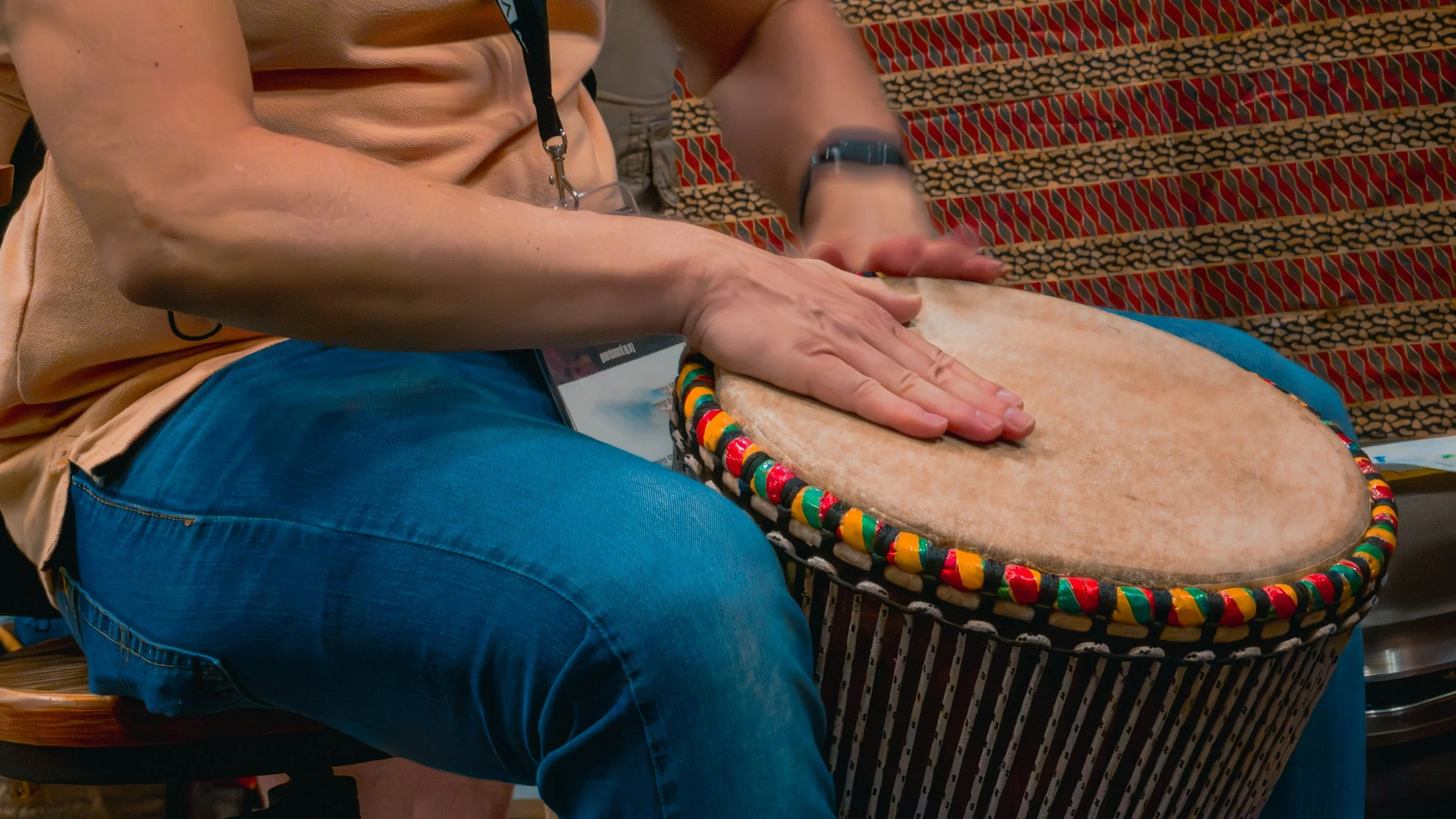
Types of Modern Drum Circles
Modern drum circles take many forms, and there is likely a type that will resonate with your goals and intentions.
Community drum circles are open-participation gatherings that welcome people of all backgrounds and skill levels. These are often held in parks, community centers, or studios and emphasize joy, connection, and shared rhythm.
Therapeutic or wellness drum circles are facilitated with an emphasis on emotional release, stress reduction, and healing. Research shows that group drumming can lower cortisol levels, support immune function, and help release stored tension from the body.
Ceremonial or spiritual drum circles draw more directly from indigenous and earth-based traditions. These circles may include intention-setting, prayer, or ritual alongside the playing of drums and percussion.
Educational drum circles focus on rhythm and music education, often used in schools, corporate team-building, or workshop settings.
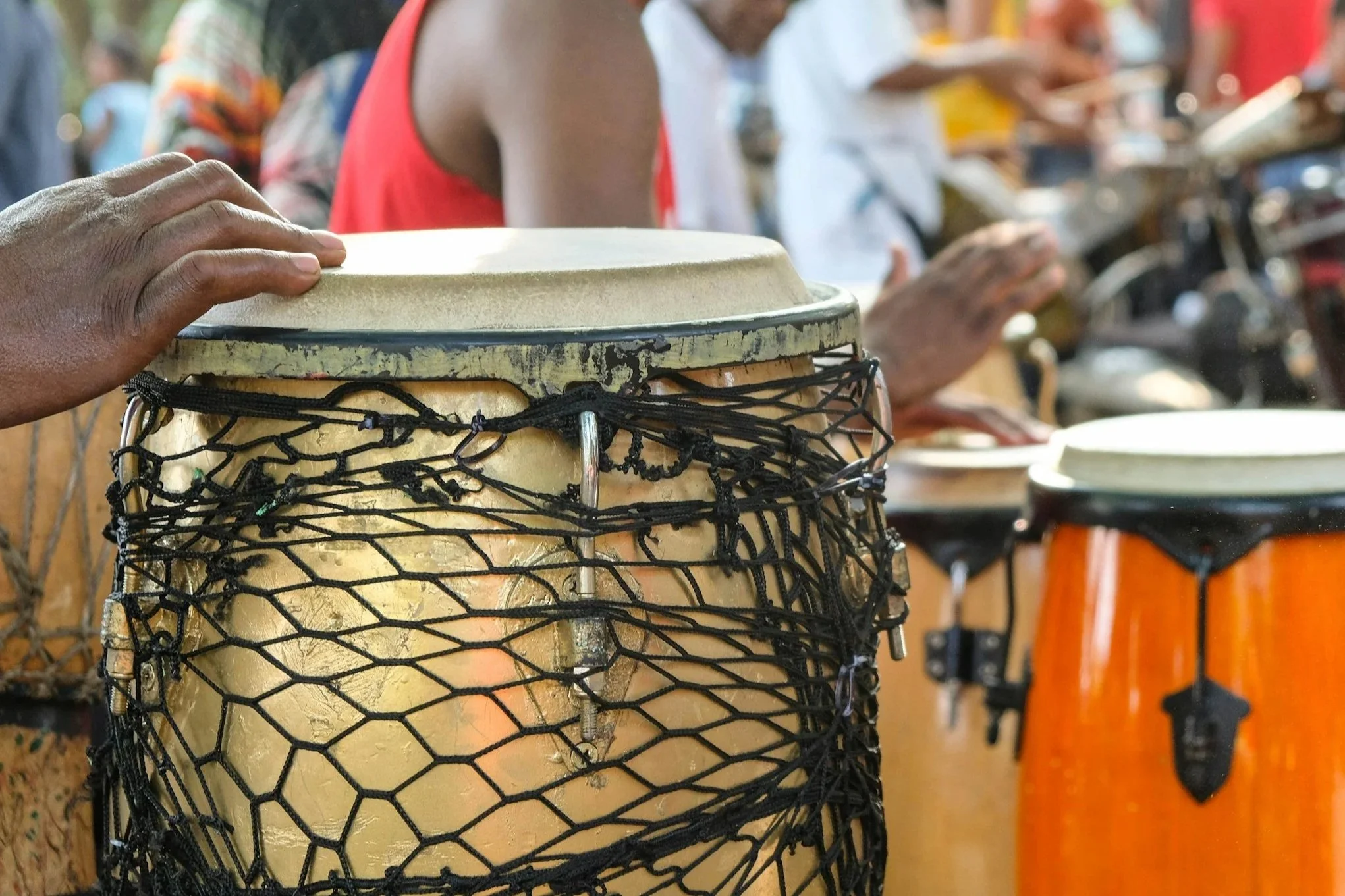
The Profound Effects of Drum Circles
At its heart, community drumming is an intuitive practice. You sit within the circle, you listen, and you find your rhythm in relationship to what is happening around you. When you play drums alongside others and pay attention to the natural moments of intensity and quiet, your brain enters a flow state, balancing your nervous system and allowing you to sink into an embodied presence. Here, the body is better able to release pent-up emotion and process stagnant feelings.
Many people find that playing drums in a group also invites a sense of belonging they had not expected. Making sound together is a deeply human practice that traces back to ancient times, and you might be surprised how open and vulnerable it allows you to be with others. For some, that first drum circle is the gateway to finding a new hobby, a weekly ritual, or a community to return to.
How to Host a Drum Circle
To host a community drumming session, you don’t need to be an expert percussionist. Here are a few ways to get started.
Begin by setting up the space. Gather drum circle drums and percussion instruments (even simple shakers or hand drums are enough to start) and arrange seating in a circle so that everyone can see and hear each other. Set a clear intention for the gathering: is this for celebration, for healing, for community connection? Does it align with a full moon or spiritual belief? Let that intention guide how you open the circle and how you close it.
Consider inviting a facilitator to help the group find its rhythm and navigate the energy of the room. Many communities have experienced drum circle facilitators who work with groups of all sizes and backgrounds.
Most importantly, make it welcoming. Remind participants that there is no experience required and no wrong way to play. The only goal is to show up, listen, and play.
What a Drum Circle Practice Can Add To Your Life
Group drumming has been associated with reduced stress and anxiety, a deeper sense of community, greater emotional expression, and increased feelings of vitality and aliveness. For many people, the drum circle becomes a kind of moving meditation, or a space to arrive exactly as you are and leave feeling more like yourself.
If you have been curious about drums and percussion, about what it might feel like to play alongside others, or simply about finding a new kind of community, a drum circle is a beautiful place to begin.
Mongata Drum Circles
Join us for a drum circle at Mongata in Madison, CT on August 25. Event details and registration information will be available soon.
Frequently Asked Questions
Is a drum circle spiritual?
A drum circle can be spiritual, but it does not have to be. Some circles are rooted in ceremony and intention, drawing from indigenous or earth-based traditions. Others are community or wellness-focused. You get to decide what meaning you bring, and how much of the experience you want to open to.
What do you do at a drum circle?
You sit in a circle with drums and percussion instruments and play together. No experience is required. You listen, follow the rhythm, and find your place in the shared sound. Some circles include guided intention-setting or facilitated rhythm exercises. Most welcome all skill levels with open arms.
