
How to Walk a Labyrinth
A Simple Guide for First-Time Walkers
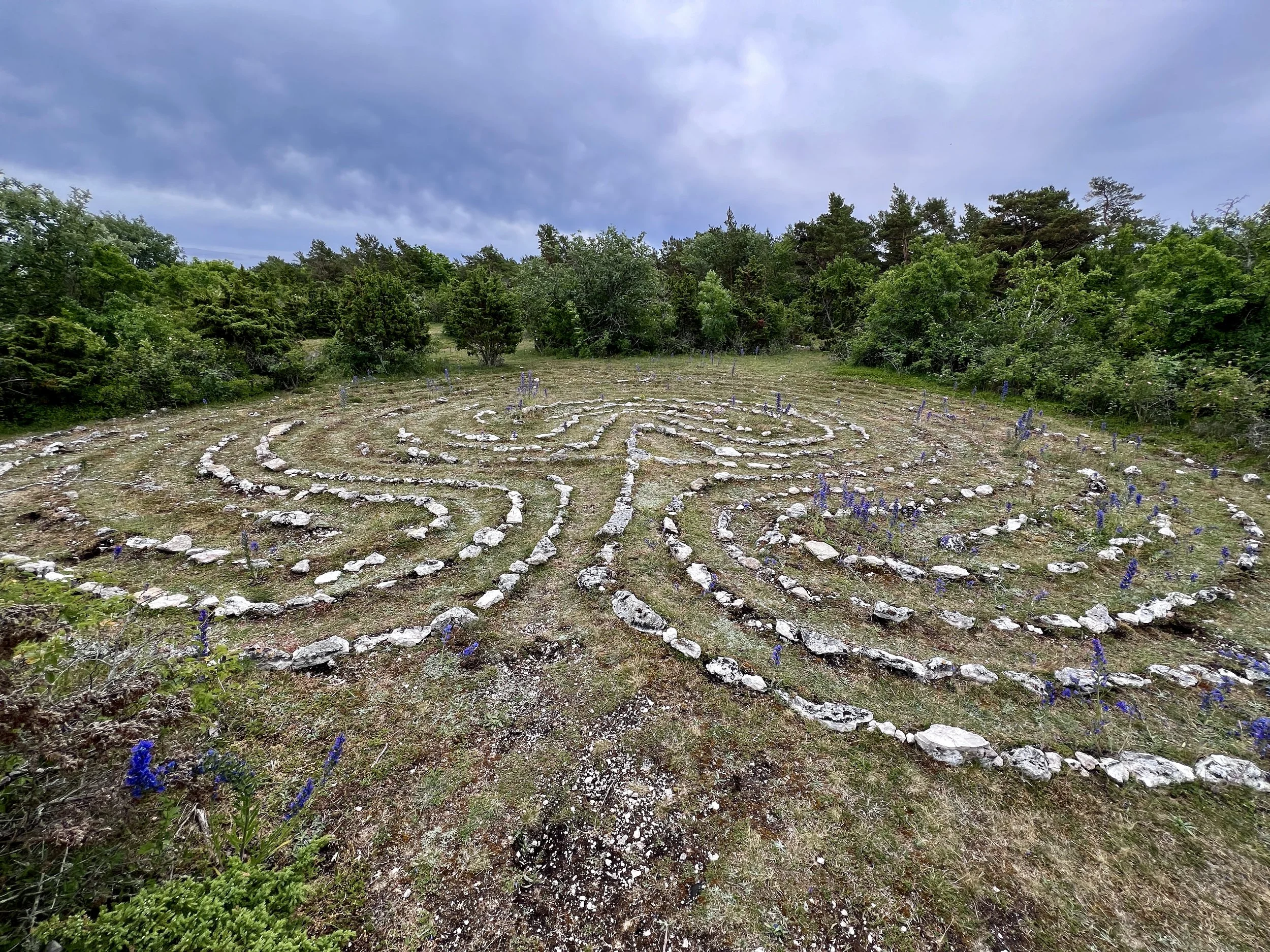
For the past several years, every June I have traveled to the Swedish island of Gotland to lead our annual labyrinth retreat. Alongside my co-guide, Lars Howlett, I spend the week walking labyrinths made of ancient stone that have rested near the Baltic Sea for centuries. Some stand near fishing villages. Others sit quietly beside the sea, their origins still debated by historians and archaeologists. Each year, these ancient paths remind me why labyrinths continue to capture the human imagination.
I first stepped into a labyrinth in 2008. I wasn't looking for a profound experience. I was simply curious. What I discovered was a practice that invited me to slow down, not just physically, but inwardly. Since then, I have walked labyrinths in churches, retreat centers, parks, and on windswept coastlines. I have watched people arrive carrying grief, exhaustion, uncertainty, and questions they had been holding for years. Again and again, I have seen how a simple walk along a winding path can create space for reflection, clarity, and deep listening.
If you have never walked a labyrinth before, you may be wondering what to expect. The good news is that labyrinth walking is remarkably simple. There are no special skills required, no right way to do it, and no possibility of getting lost. You simply begin.
What Is a Labyrinth?
A labyrinth is a single winding path that leads to a center and returns along the same route. Unlike a maze, which is designed to confuse, a labyrinth is designed to guide. While a maze presents choices and dead ends, a labyrinth offers a single path that invites you to keep moving forward.
People have used labyrinths for thousands of years as a form of walking meditation, prayer, contemplation, and reflection. Today, labyrinth walking continues to be practiced around the world by people seeking stillness, insight, creativity, or a deeper connection with themselves. The beauty of a labyrinth lies in its simplicity. The path is already there. Your only task is to follow it.
A Brief History of Labyrinths
Labyrinths are among humanity's oldest symbols. Variations of labyrinth designs have been found on pottery, coins, stone carvings, and sacred sites dating back thousands of years. They appear in many cultures and traditions, including Greek, Celtic, Norse, Indigenous, and medieval European communities.
One of the places closest to my heart is Gotland, a Swedish island in the Baltic Sea that contains one of the highest concentrations of ancient stone labyrinths in the world. Many of these labyrinths stand near the shoreline, where fishermen and coastal communities once lived and worked. Their exact purpose remains a mystery, which only adds to their fascination.
The most famous labyrinth in the modern world is the Chartres labyrinth, an eleven-circuit design built into the floor of Chartres Cathedral in France around 1201. Today, both classical labyrinths and Chartres-style labyrinths are widely used for meditation, prayer, and personal reflection.
The Seed Pattern: How Labyrinths Were Remembered
Every classical labyrinth begins with a simple geometric design known as the seed pattern. From this small arrangement of points and lines, an entire labyrinth unfolds.
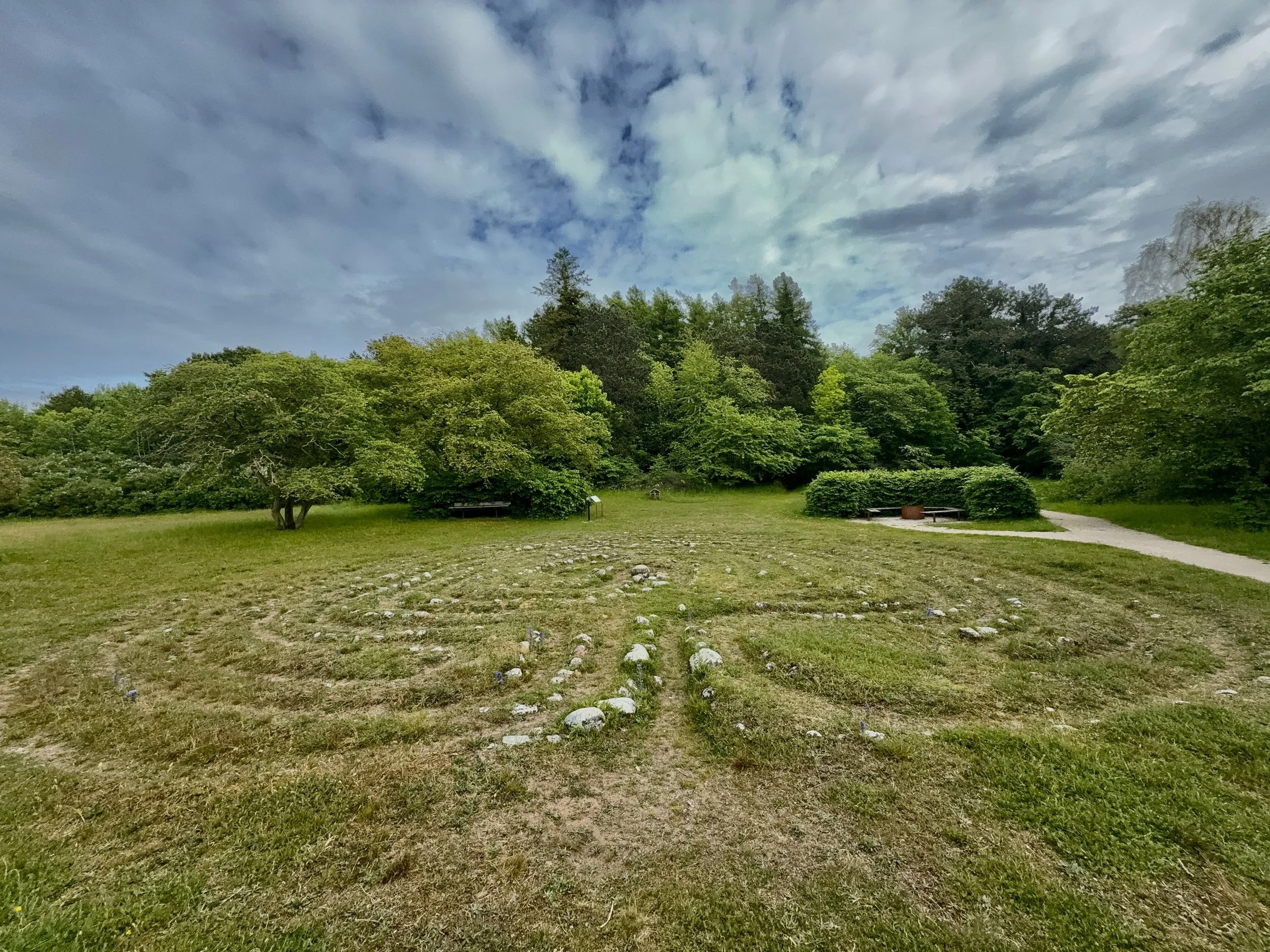
What fascinates me most is that the seed pattern is not merely a construction method. It is one of the reasons labyrinth traditions survived. For generations on Gotland and Fårö, children learned how to draw labyrinths from memory. During the nineteenth and early twentieth centuries, the seed pattern was often taught in school. Once learned, it was rarely forgotten. Even decades later, people could recreate a labyrinth from memory using nothing more than a stick and a patch of earth.
Some of the labyrinths found near Gotland's lighthouses are believed to have been built by children who knew the pattern by heart. Long before books, websites, and workshops existed, the labyrinth was carried from one generation to the next through memory, practice, and storytelling. The seed pattern became a living thread connecting people across time.
Classical and Chartres Labyrinths
While many labyrinth designs exist, two forms are especially common today.
Classical Labyrinths
Classical labyrinths are among the oldest known labyrinth forms. Most follow a seven-circuit design that emerges from the seed pattern. Their elegant simplicity allows them to be drawn almost anywhere and has helped them endure for thousands of years.
Chartres Labyrinths
Chartres-style labyrinths contain eleven circuits and four quadrants, creating a longer and more intricate path. The design encourages a slower pace and is often associated with contemplative walking and pilgrimage.
Both styles offer meaningful experiences. Neither is better than the other. The invitation is the same: follow the path to the center and see what unfolds.
How to Walk a Labyrinth
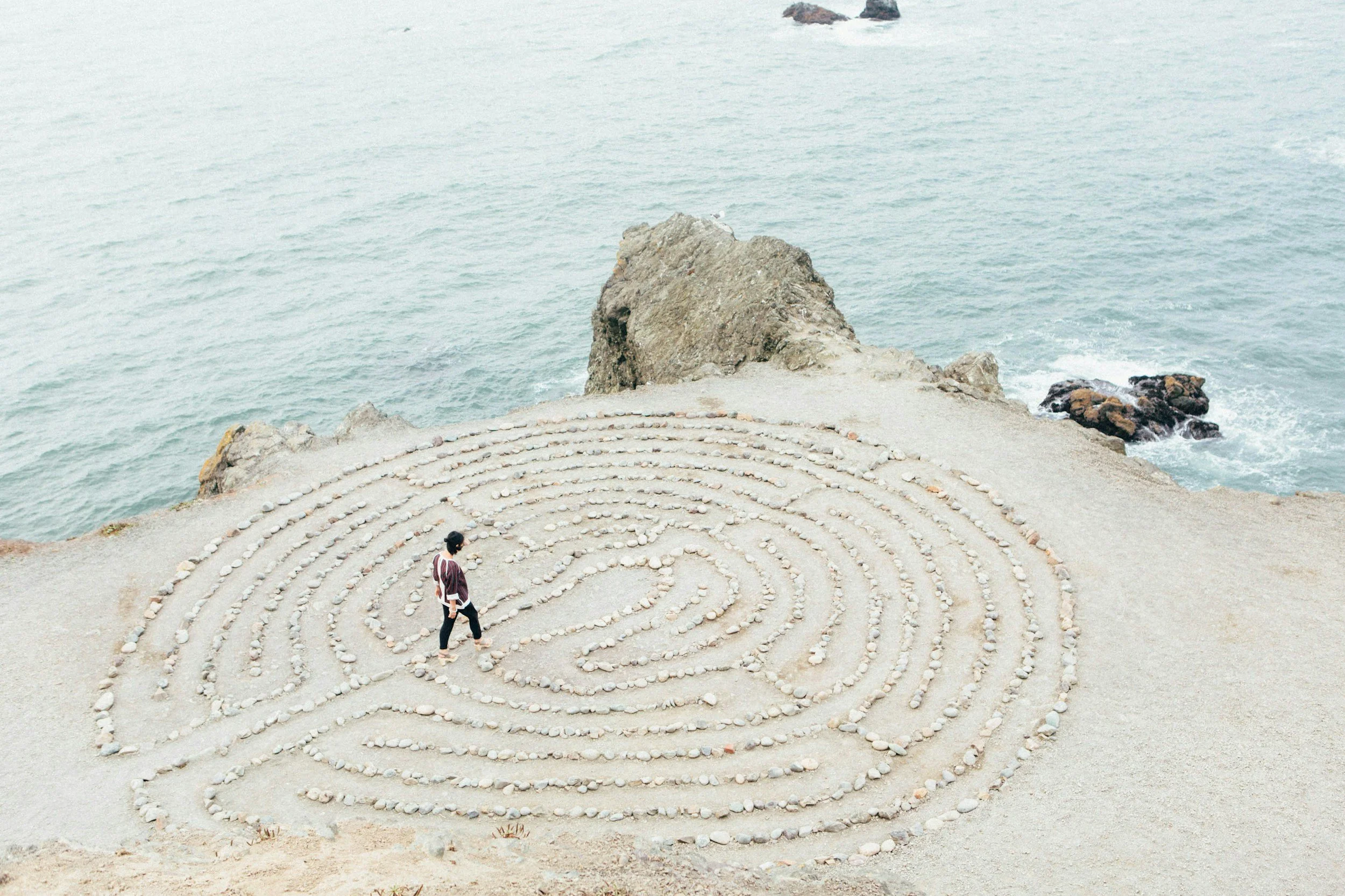
One of the most common questions I hear is, "Am I doing it correctly?" The answer is almost always yes. Labyrinth walking is less about technique and more about attention.
Pause Before You Begin
Take a moment at the entrance. Some people arrive with a question. Others come carrying grief, stress, uncertainty, or a desire for clarity. Some simply come because they are curious. Whatever brings you to the labyrinth is welcome. Before stepping onto the path, pause for a few breaths and notice how you feel.
Walk at Your Own Pace
There is no correct speed. Some people move slowly and deliberately. Others find a natural rhythm that carries them forward. You may pause, stop, or stand still whenever you wish. The labyrinth is not a race. It is an opportunity to notice.
Trust the Path
At times, the path appears to move away from the center just when you think you are getting close. This is one of the reasons labyrinths can feel so meaningful. Life rarely moves in a straight line. We circle back. We revisit old questions. We discover new layers of understanding. What feels like a detour is often part of the journey. The labyrinth reflects this truth beautifully.
Release on the Way In
Many people use the inward journey to let go of what they have been carrying. Notice your breath. Notice the feeling of your feet touching the ground. Allow worries, expectations, or mental noise to soften as you walk. There is no need to force anything. Simply allow the rhythm of the path to support you.
Rest at the Center
When you reach the center, pause. Stay for a few moments or several minutes. Some people receive an insight. Others experience a sense of peace. Some simply enjoy a rare moment of stillness. There is nothing you need to accomplish while you are there.
Integrate on the Way Out
The return path is just as important as the journey inward. As you leave the center, notice what feels different. What are you carrying with you? What are you ready to bring back into your daily life? Sometimes the answers arrive immediately. Sometimes they unfold slowly in the days that follow.

Benefits of Walking a Labyrinth
People walk labyrinths and do labyrinth walking meditation for many different reasons. Some seek stress relief and emotional balance. Others use labyrinth meditation to deepen a spiritual practice, support creativity, process grief, or gain perspective during times of transition.
Many people find that the rhythmic movement of walking helps quiet the mind and bring them into the present moment. While every experience is different, labyrinth walking often leaves people feeling calmer, more grounded, and more connected to themselves.

The Wisdom of the Path
Over the years, one lesson has returned to me again and again. The labyrinth reminds us that life is rarely linear; it twists and turns. We move forward. We circle back. We lose our bearings. We begin again. Often, what seemed like a detour turns out to be part of the path all along.
Perhaps that is why labyrinths continue to resonate across centuries and cultures. They remind us that we do not need to have everything figured out before taking the next step. We only need the willingness to take it.
One breath. One step. One turn at a time.
And sometimes, if we are paying attention, the path leads us not somewhere new, but back to a deeper sense of belonging.
