
Reclaiming The Story We Live Inside
There comes a moment in many women’s lives when we realize that the story we’ve been living by is no longer the one we want to carry forward.
Not because it was wrong.
But because it was formed in a time that required survival.

So many of us learned early how to endure. We learned how to keep going when support was thin, when responsibility outweighed rest, when pausing felt unsafe or impossible. We learned to override our own bodies, to delay our needs, to tell ourselves that later would come — once everything was finished, once everyone else was settled, once we finally arrived.
These stories did not arise from weakness.
They arose from necessity.
They were shaped in seasons of caregiving, upheaval, transition, illness, loss, and persistence. They helped us move through life when stopping wasn’t an option. And for that, they deserve respect.
But there comes a time when the body begins to ask a different question.
Not How much can I carry?
But How do I want to live now?
Often, this question arrives quietly — through fatigue, irritability, grief, or a sense of being triggered by moments that shouldn’t feel so heavy. When this happens, it’s not a failure of resilience. It’s an invitation to integration.
This is what I think of as Threshold Medicine — the care we need in the in-between spaces of life. Not crisis support. Not reinvention. But companionship and guidance for the moments when the old way no longer fits and the new way has not yet fully arrived.

What many women discover at this stage is that before we can change how we feel, or how we move forward, we must first change the story we are telling about ourselves.
The nervous system listens to narrative.
The body organizes itself around meaning.
If the story says, I must push through, the body prepares for strain.
If the story says, I am alone in this, the body stays on alert.
If the story says, Rest comes later, the body never fully exhales.
Reclaiming the story doesn’t mean erasing the past. It means honoring what was required — and consciously choosing what is no longer necessary.
It means recognizing that the woman you are now is not the woman you were then. You carry more self-knowledge. More discernment. More authority over your own timing.
You are allowed to move at a pace that supports your health.
You are allowed to receive help.
You are allowed to live without proving your strength through exhaustion.
Within Mongata, this work is held gently — through sound, meditation, creative reflection, and practices that invite the body back into safety and self-trust. These offerings are not about fixing what’s broken, but about listening to what is ready to change.
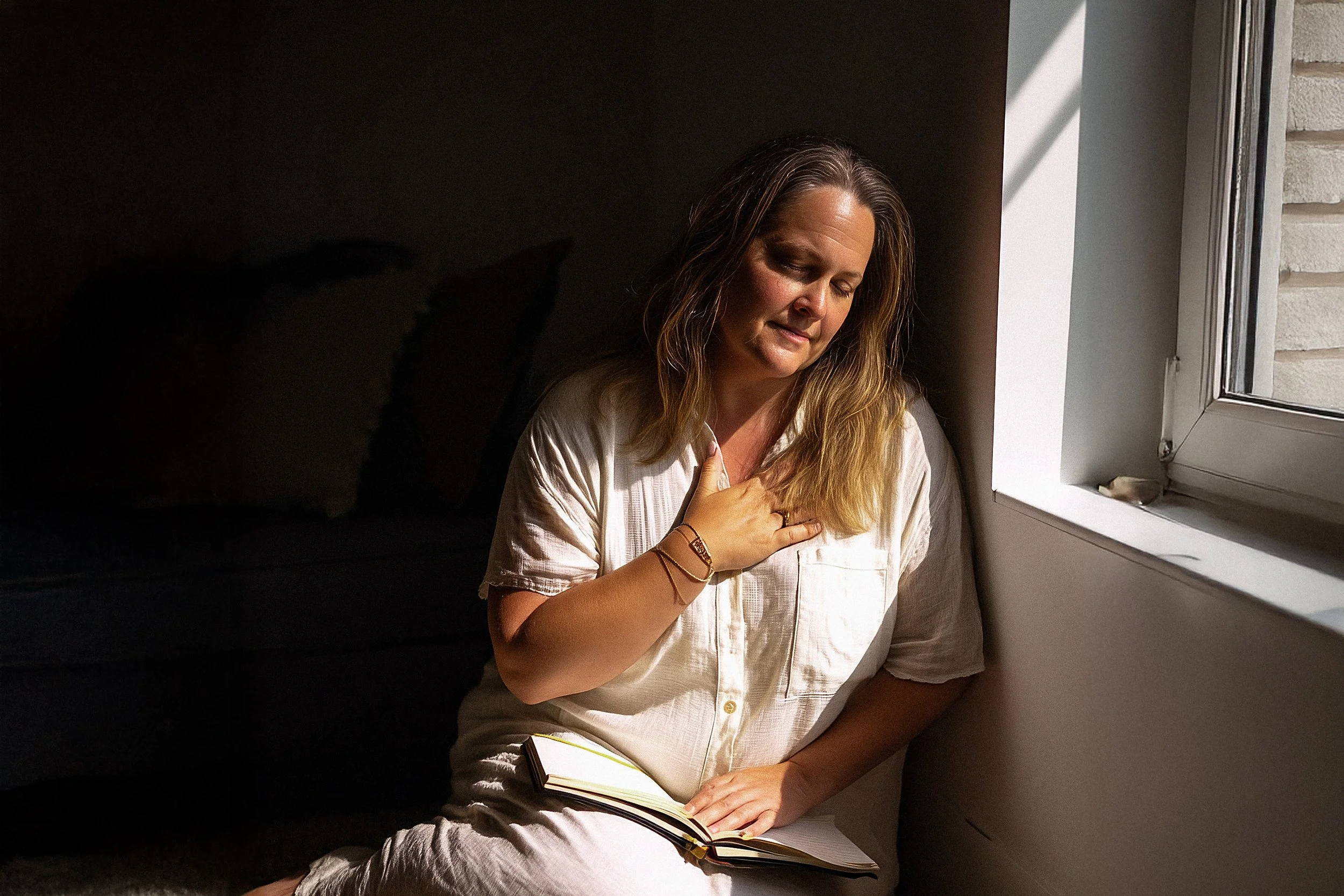
I’ve created a guided meditation to accompany this reflection — an invitation to honor where you’ve come from, and to begin stepping into a new narrative shaped by presence, support, and choice.
You can listen to the meditation here.
May it meet you exactly where you are.
And may the next chapter of your life be lived from a story that truly belongs to you.
