
The Sounds of Gotland: How Nature Teaches Us to Listen
Cranes, ferry horns, sheep, and the ancient soundscape of Sweden's island of Gotland
One of the gifts Gotland continues to offer me is the way it teaches me to listen.
Each year, when I return to this Swedish island that has been part of my life for decades, I find myself noticing something different. Sometimes it is the changing light across the Baltic Sea. Sometimes it is an old church, a familiar path, or a conversation with a friend.
This year, I found myself paying attention to the sounds.
Most travelers remember a place through its scenery. They remember the sea cliffs, the architecture, the food, or the sunsets. Yet some places reveal themselves through listening. As a sound therapist and therapeutic musician, I have spent much of my life exploring how sound shapes our experience of the world. What continues to fascinate me is that some of the most powerful listening experiences do not happen in concert halls or recording studios. They happen outdoors, in relationship with the land itself.
Over time, I have come to realize that one of the ways I know I am home on Gotland is through its sounds.
Hearing the Cranes Return to Gotland
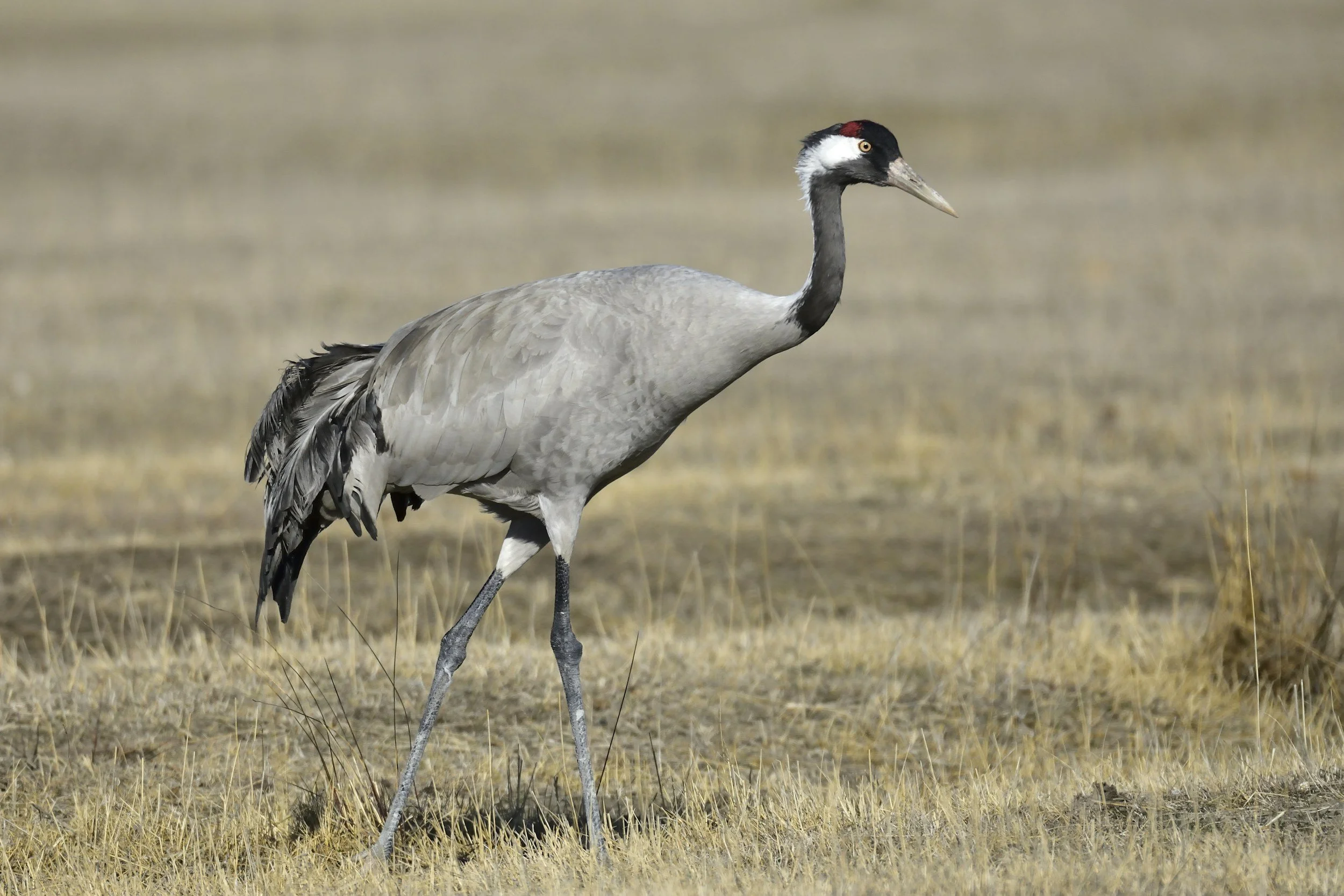
One of the first sounds I notice when I arrive on Gotland is the call of the Eurasian crane.
Long before I visit the sea cliffs, walk the labyrinths, or wander through the medieval streets of Visby, I hear cranes calling across the fields. Their voices carry across the landscape, announcing their presence long before they appear on the horizon.
For the people of Gotland, the return of the cranes is not simply a seasonal event. It is one of the most anticipated signs that spring has arrived.
Every year, family and friends exchange messages announcing the first sightings. Social media fills with photographs of nesting pairs and newly hatched chicks. Throughout the summer, people follow the progress of crane families as they move through the fields and wetlands.
The cranes belong to the cultural life of the island.
Their return signals the end of the long Nordic winter. Their calls announce longer days, warmer weather, and the beginning of the growing season. For many people, the sound of cranes is the sound of spring itself.
A Family Story About Cranes
One summer, when my son was eleven years old, a pair of cranes spent much of the season in the fields surrounding the farm we stay at in northern Gotland.
Each morning we would sit at the kitchen table eating breakfast while watching them through the window. Day after day they wandered through the grasses, calling to one another and moving across the landscape. They became part of our daily rhythm.
One morning my son looked out the window and said, "Those are really big birds."
A few days later, he encountered them at much closer range while walking down the farm road. He came running back toward the house with a completely new appreciation for their size.
To this day, I smile whenever I remember those cranes. They were no longer simply birds in a field. They had become part of our family's story.
Experiences like these remind me that listening creates relationship. Over time, the sounds of a place stop being background noise and become part of our lives.
The Historical Relationship Between Cranes and the People of Gotland
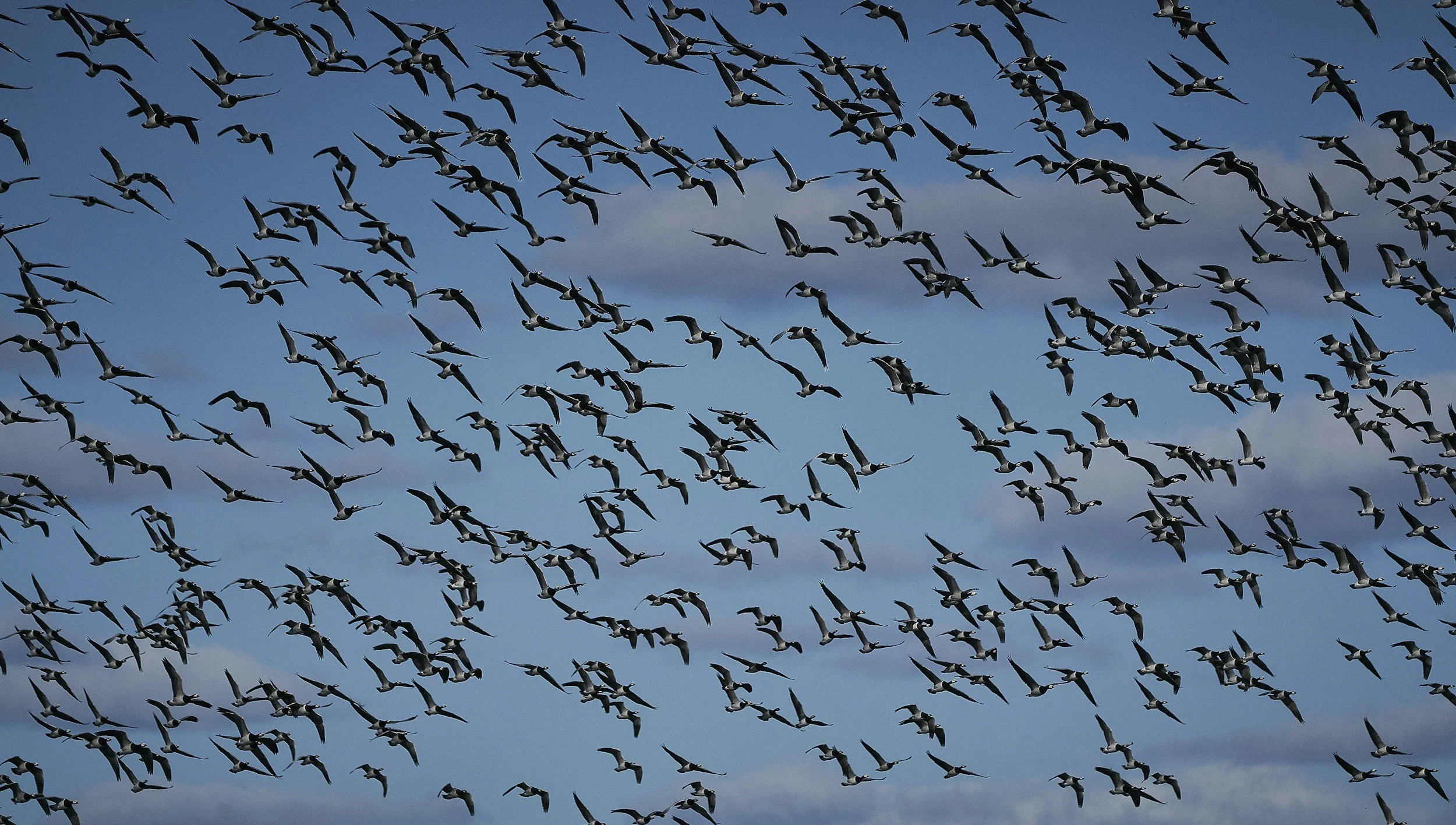
As I have reflected on the cranes, I have also remembered stories my father and grandmother shared about life on Gotland.
Historically, wild bird eggs were sometimes gathered in the spring throughout parts of Sweden, including Gotland. After a long winter, before gardens and crops began producing food, these seasonal resources provided important nourishment.
Today, Eurasian cranes are fully protected throughout Sweden, and disturbing nests or collecting eggs is prohibited. Yet these stories reveal something important about earlier generations. The cranes were not simply admired from a distance. Their arrival marked seasonal change, food availability, and the return of life after winter.
The cranes still announce spring today. The meaning of their call, however, has changed with each generation that listens.
The Crane Dance and the Gotland Labyrinth
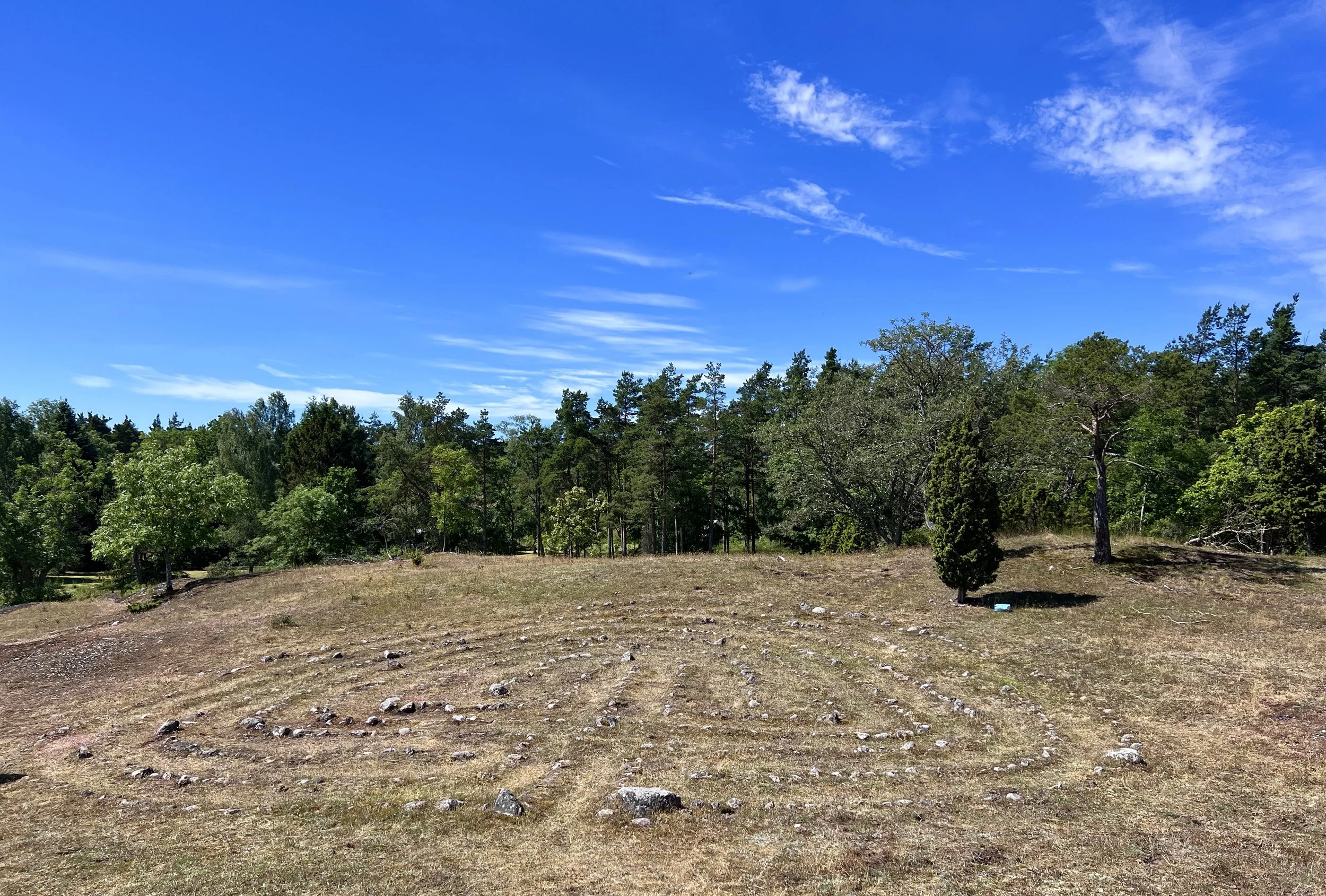
During our annual Gotland Labyrinth Retreat, I often invite participants to explore listening through movement as well as sound. Walking a labyrinth is exploration through movement but there are many ways to move through a labyrinth.
Last summer we visited an ancient labyrinth located beside a Bronze Age burial cairn near the Baltic Sea. Before entering the labyrinth, I taught participants a crane dance. Together we moved around the perimeter of the labyrinth before entering and dancing in its pathways.
The cranes themselves were nowhere in sight, yet their presence felt woven into the landscape. The experience became a reminder that listening extends beyond our ears. We also listen through movement, memory, story, and place.
Cranes in Gotland Folklore and Mythology
The significance of cranes on Gotland extends far beyond the natural world.
Across the island stoodthe famous Gotland picture stones, intricately carved monuments depicting gods, heroes, ships, and mythological scenes, now found in museums. Many include images of long-necked birds believed by some scholars to represent cranes or swans.
These birds frequently appear alongside Valkyries, the legendary figures who guided fallen warriors between worlds. In this context, cranes become more than birds. They become symbols of transition, guidance, and connection between the visible and invisible worlds.
One particularly famous picture stone from Sanda depicts a long-necked bird hovering above a divine figure. While the original story has been lost to time, the image suggests that cranes carried sacred significance within the spiritual imagination of the island.
The Everyday Sounds of Gotland
The cranes are only one part of Gotland's soundscape.
In Visby, the ferry horns announce the arrival of ships from the Swedish mainland. Cathedral bells mark the passing of time. Fishing boats move through the harbor. Tractors work the fields. Seabirds circle above the Baltic Sea,and everywhere, there are sheep.
Throughout the summer, the sounds of sheep drift across fields and meadows. In spring, newly born lambs add their voices to the landscape. Their calls become as familiar as the wind itself.
These sounds create a living soundtrack that reflects the agricultural and maritime traditions of the island.

Summer Life, Fika, and Outdoor Living
The summer months transform the rhythm of life on Gotland.
People gather outdoors for meals, celebrations, and conversation. Friends meet for fika, Sweden's cherished tradition of coffee and companionship. Traditional music drifts through village squares and gardens. Families spend long evenings outdoors enjoying the extended northern daylight.
The season stretches from Midsummer through the August crayfish celebrations, creating months of outdoor living that celebrate community, nature, and connection. we call this Sommarlov, our summer break, our summer life.
Listening becomes part of that experience. The sounds of conversation, music, birds, wind, and sea blend together into something uniquely Gotlandic.
What Two Cows Taught Me About Listening
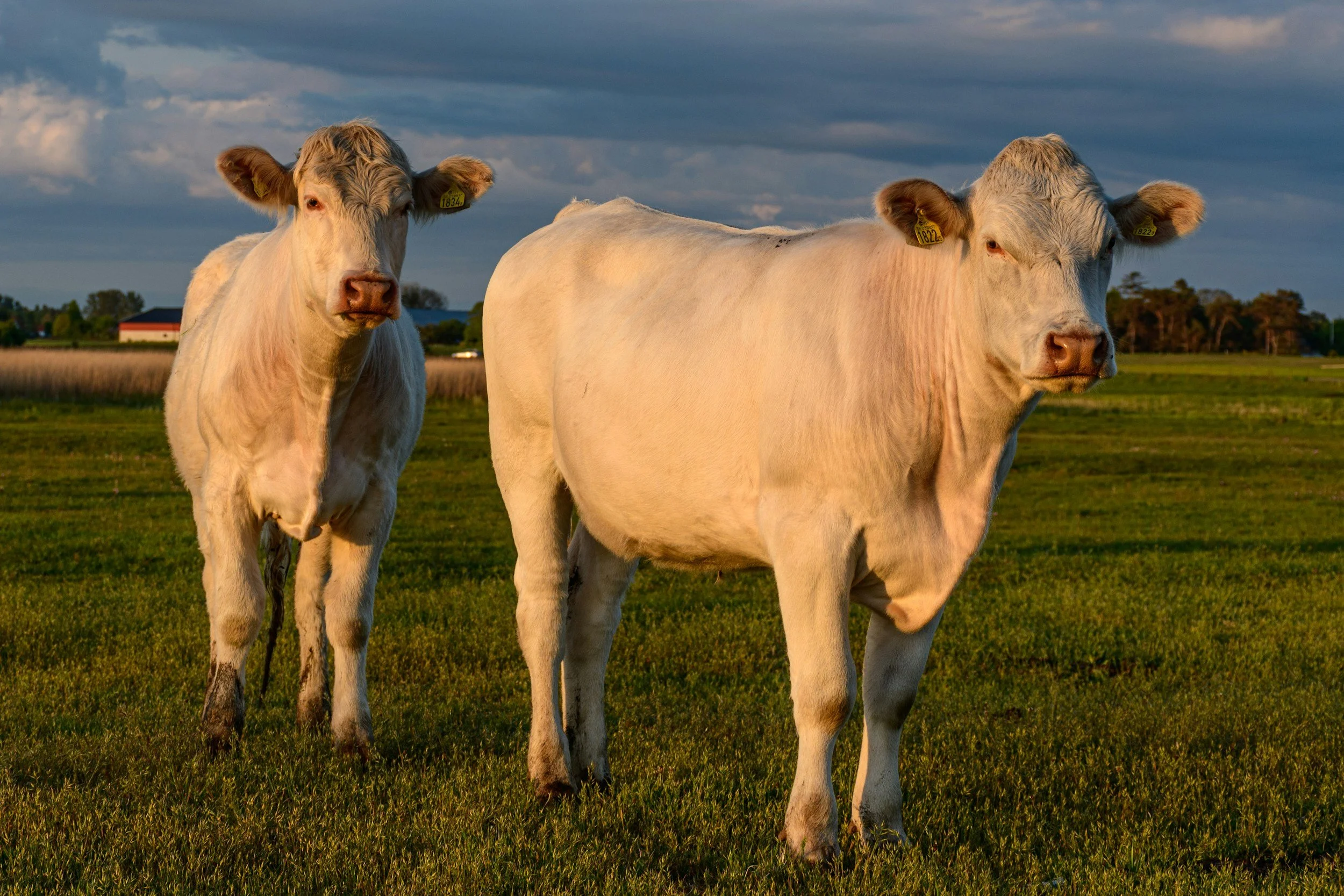
One of my favorite Gotland memories involves two white dairy cows and a sign that read, "Please do not talk to the cows."
Naturally, I ignored it.
The cows followed me along the fence as I chatted with them during my walk. When I reached the end of the field and continued down the road, they began calling after me so loudly that the entire neighborhood could hear.
A few moments later, the farmer emerged from her house, pointed directly at me, and said, "I know it was you."
Apparently, everyone on the road knew exactly what had happened. The cows only carried on like that when someone stopped to talk with them. They were in deep grief for the loss of their dear friend. In this case that would be me. They were in a deep state of longing, a longing of friendship.
The story still makes me laugh, but it also reveals something important. The people who live close to the land learn its sounds intimately. They know when something is different. They know when the cranes have returned. They know when the sheep are restless. And apparently, they know when a visitor has ignored the sign and befriended the cows.

Why Listening Creates Belonging
One of the greatest lessons Gotland has taught me is that listening is not merely a sensory act. It is a relationship.
When we listen deeply, we begin to notice the conversations already taking place around us. We hear the relationship between birds and seasons, between wind and sea, between history and landscape, between people and place.
The cranes still call across the fields. The ferry horns still echo across the harbor. The church bells still ring. The sheep still wander the fields.
The sounds themselves have not changed.
What changes is us.
The longer we listen, the more we belong.
A Listening Invitation
As I finished writing this essay, I found myself wondering what sounds tell you that you are home.
Perhaps it is the call of a particular bird. The sound of waves along a shoreline. Wind moving through trees. Church bells. The voices of people you love. Or perhaps it is a sound so familiar that you hardly notice it until it disappears.
This week, I invite you to spend a few moments listening to the place where you are. Not listening for information or distraction, but simply listening with curiosity.
If you would like a companion for that practice, I invite you to explore the free guided meditations and sound journeys on the Mongata Podcast. Each recording is designed to help you slow down, listen more deeply, and reconnect with yourself through sound, breath, and presence.
You can find the Mongata Podcast here.
May you discover what is already in conversation around you.
