
How to Develop Your Intuition and Learn to Trust What You Already Know
Most people who say they are disconnected from their intuition are not missing intuition. They are operating in a way that makes their internal information difficult to access.
Intuition is not a mystical ability. It is the body’s capacity to integrate experience, pattern recognition, and sensory input into usable guidance. We rely on it constantly, even if we don’t know it. When we hesitate before agreeing to something. When a decision looks good on paper but feels wrong. When you just “know.”
The problem is not intuition itself. The problem is that many people are making decisions while stressed, overstimulated, or disconnected from their bodies. Under those conditions, intuition becomes harder to distinguish from fear, habit, or external pressure.
Developing intuition is a practical skill. Mongata events and offerings, such as sound baths and human design, are great tools for developing your intuition. Learn more and find out how Mongata can help you strengthen your inner knowledge ahead.
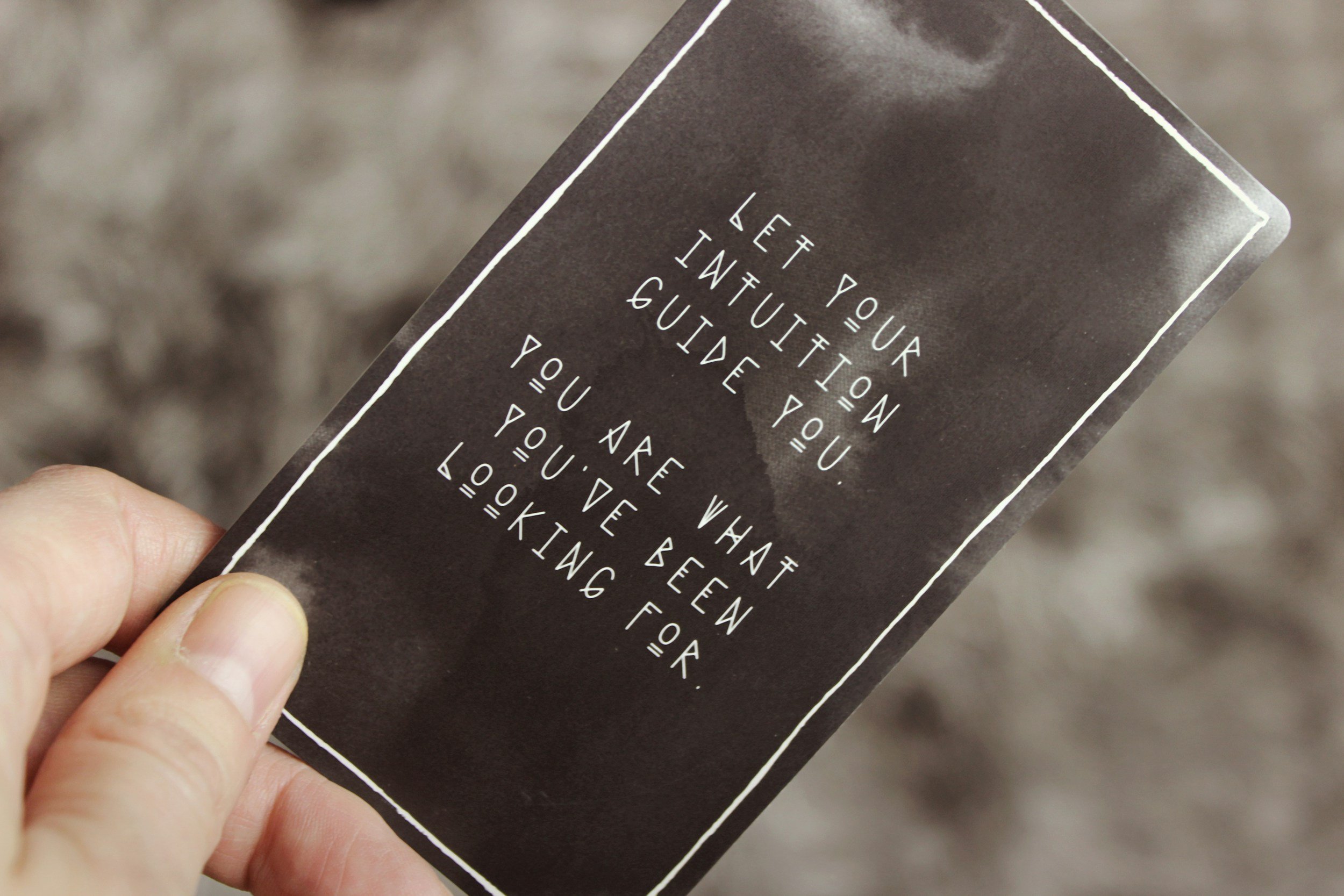
What Intuition Really Is and What It Is Not
Fear and intuition can be confused because they both influence decision-making. Fear is a stress response. It is driven by the nervous system when it perceives a threat or urgency. It tends to repeat the same message, escalate quickly, and narrow your options. When fear is active, the body is preparing to protect itself.
Intuition operates differently. It is information that arises when the nervous system is regulated to perceive subtle cues. These cues may come through physical sensation, timing, or a sense of alignment or resistance. Intuition does not demand immediate action. It provides data from your body that your brain can consider.
People struggle to tell the difference because they often make decisions under stress. When the nervous system is activated, fear is amplified, and intuitive signals are harder to feel. Developing intuition is less about interpreting feelings and more about learning to recognize the state you are in when information arises.
This is why practices that support regulation and presence are foundational to developing your intuition.

How Modern Life Dulls Our Intuitive Awareness
Modern environments demand speed, productivity, and constant engagement. There is always a screen or a story diverting our attention. These conditions keep the nervous system in a heightened state of activation.
When the body is under ongoing stress, it prioritizes efficiency and protection. Subtle messages, gut feelings, and internal signals are often overridden by urgency and external input.
There is also a strong cultural emphasis on logic, data, and external validation. Many people learn early on to dismiss bodily awareness as unreliable or inconvenient. Over time, this creates distance between internal signals and decision-making. None of this eliminates your intuition. It simply makes it harder to tune in.

Learning to Pay Attention to the Language of Your Body
The body is the primary channel through which your intuition is expressed. Before your mind forms a conclusion, your body registers information. This may show up as physical tension or ease, changes in breathing, or a clear sense of readiness or resistance. These sensations are physiological responses shaped by experience.
Developing intuition does not require constant analysis. It requires observation over time. When you are faced with a decision, ask yourself questions that can help you tune into your inner knowing.
What does my body do when I make decisions that turn out well?
What sensations appear when I ignore my initial response?
Do certain choices consistently leave me feeling unsettled afterward?
Paying attention to patterns helps you feel your intuition more clearly.
Stillness and Clarity
Intuition is most accessible when the nervous system is regulated. Finding stillness allows the body to settle enough for subtle information to register. For many people, sound baths provide an effective entry point because they support regulation without requiring deep effort.
Sound works directly with the nervous system. It helps reduce stress responses and shift attention out of constant problem-solving. When this happens, your internal signals are easier to notice.
At Mongata, our sound baths are a practical tool for regulating your nervous system, meditating, and creating space to explore within.

Human Design as a Framework for Trusting Your Intuition
Human Design is another great tool for understanding how your intuition manifests. A key component is inner authority. Your authority describes where clarity comes from when you are making decisions. When people attempt to make decisions using strategies that are misaligned with their design, intuition can feel inconsistent or unreliable, and lead to self-doubt.
Human Design sessions at Mongata help clients recognize patterns in their decision-making and internal signals.
The Impact of Relationships and Work on Intuition
Relationships and work settings can either support or interfere with intuitive clarity. Some relationships create a sense of safety and ease. Others increase tension and self-monitoring. The body registers these differences immediately, even when the mind rationalizes them.
The same applies to work. Misalignment between role, expectations, and energy can lead to chronic stress, which weakens access to intuitive signals.
Human Design can help clarify why certain dynamics feel supportive while others feel draining. This understanding often validates intuitive responses that were previously dismissed.

Practices That Support Intuition Over Time
Intuition strengthens through consistent, supportive practices such as:
Sound baths that regulate the nervous system
Healing circles that provide reflection and perspective
Journaling after embodied experiences rather than abstract thinking
Human Design readings that reveal long-term patterns

Develop Your Intuition at Mongata
At Mongata, we support intuitive development through in-person and online experiences, resources, and classes. If you are ready to develop your intuition in a grounded, usable way, explore our Human Design readings, sound baths, and healing circles. These offerings are designed to help you build trust in your decisions and move through life with greater clarity and confidence.
Frequently Asked Questions
Is it possible to develop intuition?
Yes. Intuition develops through nervous system regulation, awareness, and repeated practice. It becomes more reliable over time.
What blocks our intuition?
Chronic stress, trauma, overstimulation, and learned self-doubt interfere with intuitive signals. These blocks are common and can be addressed.
Which personality type has the highest intuition?
Intuition is not determined by personality type. Human Design shows that intuition functions differently depending on individual design and inner authority.
How do I unblock my intuition?
Begin by reducing stress, paying attention to bodily signals, and using practices that support regulation and reflection. Sound baths, healing circles, and Human Design exploration can help restore clarity and trust.
