
Gotland and Its Ancient Labyrinths
Gotland is an island of pathways. Some cross the limestone landscape between farms and villages. Some follow ancient routes toward churches, harbors, and fishing places. Others lead outward across the Baltic Sea, along waterways traveled for thousands of years, and then there are some which turn inward.
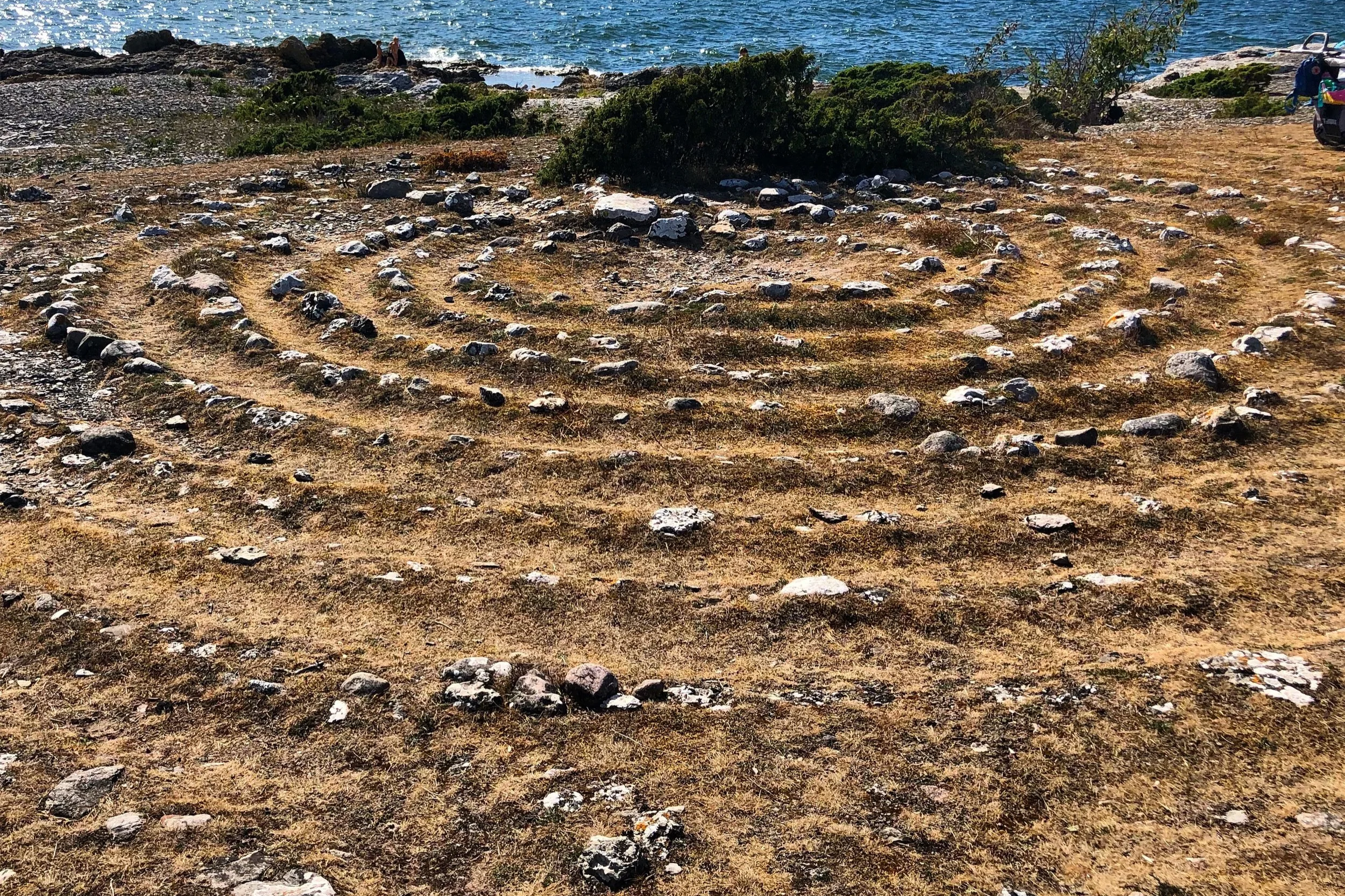
Across Gotland, stones laid upon the earth form ancient labyrinths: winding pathways that circle toward a center and carry the walker outward again. They rest beside the sea, near old fishing places, and within landscapes already layered with generations of human presence.
Gotland holds some of the oldest labyrinths in the world. In Scandinavia, there are over 500 labyrinths, and Gotland holds over 40 labyrinths.
For generations, and in some places across millennia, people have returned to the meandering path of the labyrinth. They laid the stones, tended the paths, walked toward the center, and followed the winding way outward again.
Across time and place, the stories surrounding labyrinths have changed. They have been associated with the sea and safe passage, with fishing and favorable winds, with courtship and games, with protection, ritual, ceremony, and pilgrimage. And sometimes, they were simply places to play. Children ran and walked the winding paths of labyrinths built in their schoolyards, many of them laid out by schoolmasters some 150 years ago. The labyrinth belonged not only to ritual and folklore, but to childhood, community, and everyday life. Meanings have been added, forgotten, remembered, and transformed, and still the pattern remains.
To begin to understand why the labyrinth became so deeply rooted on Gotland, we first need to understand something about the island that has held these paths for so long.
Part I: Understanding Gotland
The Island of Gotland: Sweden's Baltic Crossroads
Gotland lies in the Baltic Sea, roughly midway between the Swedish mainland and the Baltic countries to the east. Today it is part of Sweden, but geographically it has always occupied a world of its own.
Look at Gotland on a map and its importance becomes immediately apparent. The island sits within the great watery crossroads connecting Scandinavia with Finland, the Baltic lands, Russia, Poland, Germany, and the wider European world.
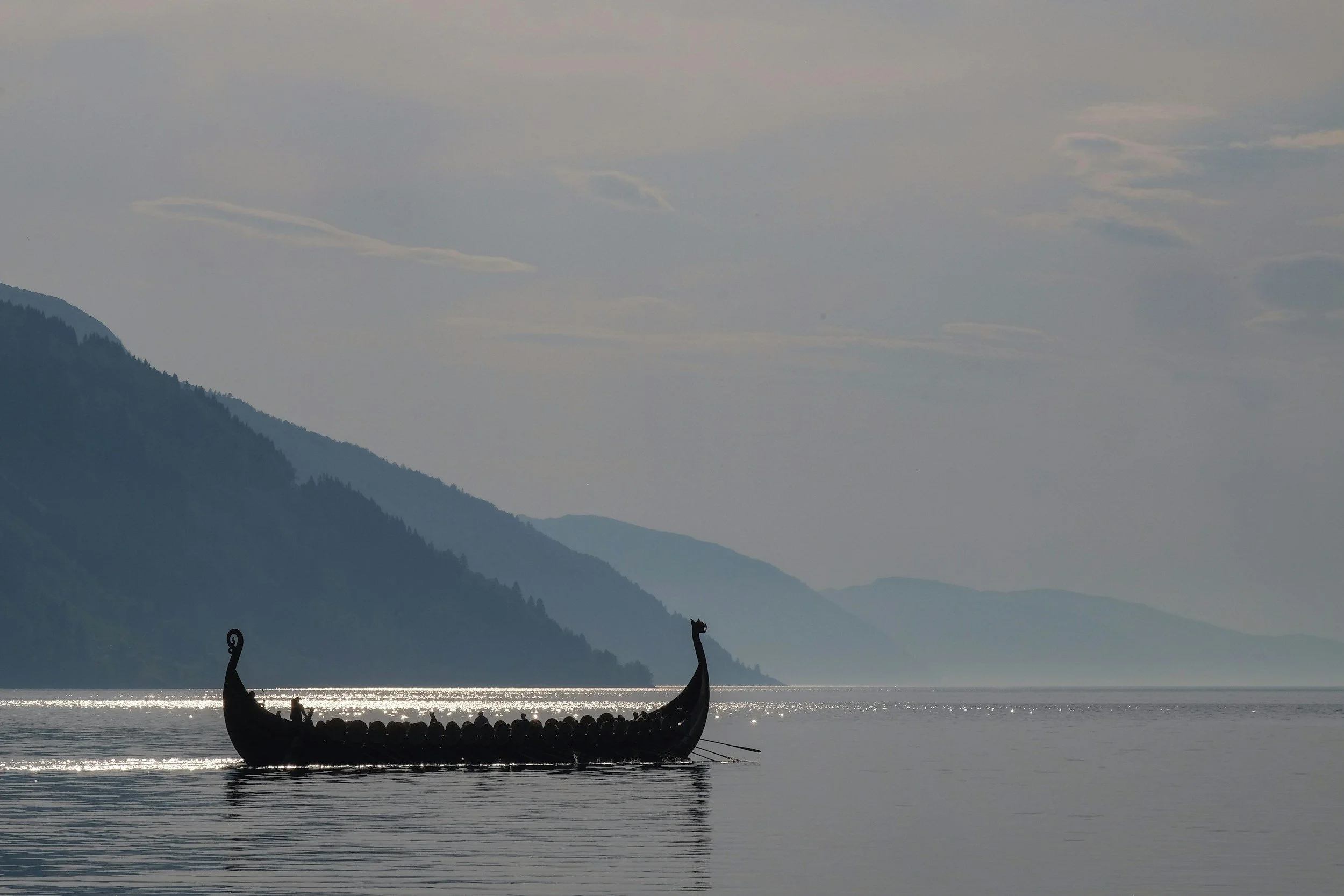
For people living on Gotland, the sea was never simply the boundary of the island. It was the primary means by which Gotland was connected to the larger Baltic world. For thousands of years, maritime routes linked the island with the Swedish mainland, Denmark, Finland, the eastern Baltic, the lands that are now Poland and Germany, and, through increasingly extensive trade networks, places much farther away.
Gotland's position in the middle of the Baltic made it unusually well situated for trade. By the Viking Age, Gotlandic merchants were participating in networks that reached both westward into northern Europe and eastward along the great river systems toward Byzantium and the Islamic world. In the medieval period, these earlier patterns of exchange would help Visby develop into one of the Baltic's most important commercial centers, eventually bringing the city into the trading world of the Hanseatic League.
The island's geography shaped more than its trade. Gotland is largely composed of limestone formed approximately 430 million years ago, when this part of the world lay beneath a warm, shallow tropical sea. Fossils of corals and other marine organisms remain embedded in the stone, making the island's geological past unusually visible in the present landscape.
Limestone has also profoundly shaped Gotland's human environment. It provided the building material for medieval churches, farmhouses, boundary walls, fortifications, and the stone buildings of Visby, while the island's relatively thin soils influenced patterns of farming and settlement. Along the coast, erosion has sculpted exposed limestone into the distinctive freestanding formations known in Swedish as raukar, some of the most recognizable features of the Gotlandic landscape.
The labyrinths belong within this relationship between geology, landscape, and human activity. Most are constructed from locally available stone laid directly upon the ground, often in places where the surrounding landscape is as important to understanding the site as the pattern itself. Many are associated with coastal environments and historic fishing communities, placing them within Gotland's long relationship with the Baltic Sea.
To encounter a labyrinth here, then, is not to encounter an isolated monument. It is to encounter one element within a cultural landscape shaped over thousands of years by geology, seafaring, settlement, trade, livelihood, and tradition.
The Swedish Island That Became a Cultural Bridge
Gotland's location did more than create economic opportunity. Centuries of movement across the Baltic brought the island into sustained contact with people from different cultural, linguistic, and religious worlds.
The archaeological record makes these connections tangible. Objects found on Gotland originated far beyond Scandinavia, while Gotlandic objects and influences traveled outward. During the Viking Age, silver arrived from the Islamic world, continental Europe, and other distant trading regions. In the centuries that followed, Visby's growing importance brought Gotlanders into increasingly close contact with merchants and communities throughout the Baltic and northern Europe.
Exchange was never limited to what could be loaded onto a ship. Ways of building, making, decorating, worshipping, telling stories, conducting trade, and understanding the world also moved between communities. Gotland became a place where influences arriving from elsewhere could be encountered, absorbed, and transformed within a distinctly island culture.
We can see this combination of connection and distinctiveness throughout Gotland's material and cultural history. Its picture stones, burial traditions, architecture, language, folklore, and later medieval churches reveal both participation in a wider world and the development of traditions that are recognizably Gotlandic.
This becomes particularly interesting when considering the island's labyrinths. The classical labyrinth is an ancient pattern whose history extends far beyond Scandinavia. It is famously associated with the Greek island of Crete through the myth of Theseus, Ariadne, and the Minotaur, while labyrinthine patterns and related forms also appear in ancient traditions elsewhere, including Egypt and India. Rather than belonging to a single culture, the labyrinth became a remarkably persistent pattern that appeared across widely separated places and periods of human history.
In northern Europe, the classical labyrinth took on a particularly rich life of its own. Related forms appear throughout Scandinavia and around the Baltic, including Finland, Estonia, and parts of Russia. The pattern crossed geographic and cultural boundaries, but that does not mean it carried precisely the same meaning wherever it appeared.
Gotland offers us an opportunity to consider both things at once: the remarkable persistence of an ancient pattern across cultures and the particular ways generations of people on one Baltic island made that pattern their own.
A Landscape Made of Stone, Sea, and Memory
The history of Gotland cannot be separated from its landscape.
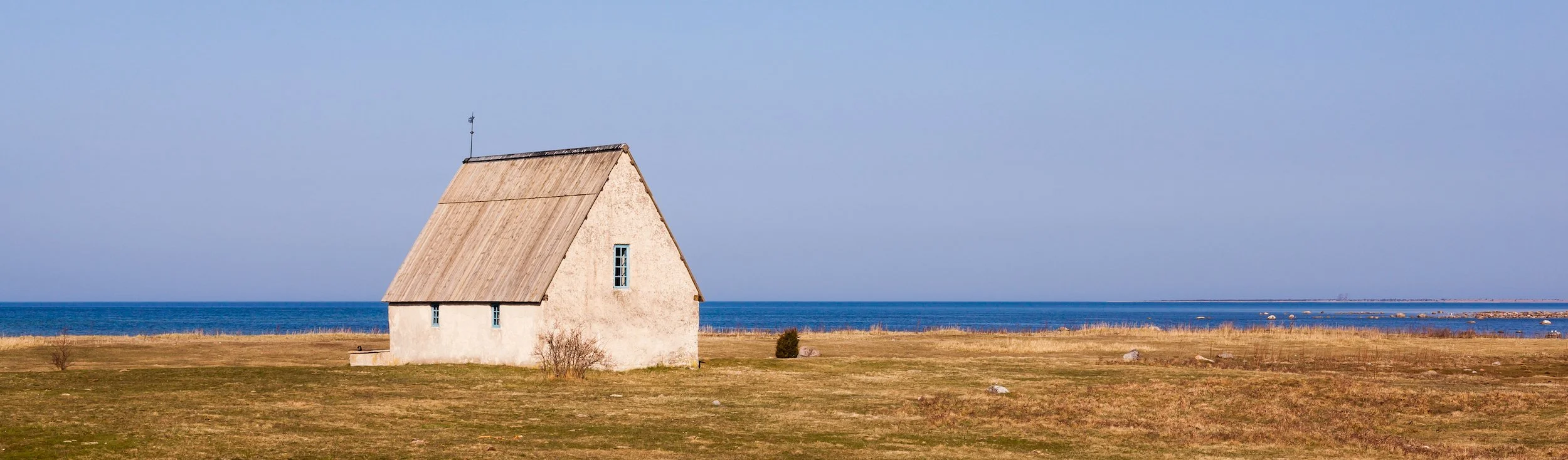
Beyond Visby, much of the island remains rural. Roads pass through farmland, pine forest, open grazing land, wetlands, and the flower-rich meadows for which Gotland is known. Medieval churches still stand at the centers of small parishes, while ancient graves, stone settings, house foundations, and other archaeological remains exist within landscapes that continue to be farmed and inhabited.
The result is an unusual proximity between past and present. An ancient burial ground may lie beside a modern road. A medieval church may remain the active parish church of a community whose history extends much further back. Gotland's distinctive picture stones preserve images of ships, riders, animals, women, weapons, and narrative scenes created more than a thousand years ago.
The sea remains a constant presence within this landscape. For earlier generations of Gotlanders it influenced not only travel and trade, but livelihood, settlement, seasonal work, and the risks of everyday life. Fishing communities developed along the coast, and the island's harbors and landing places connected rural Gotland with the wider Baltic.
Many of Gotland's surviving stone labyrinths are found within this coastal world, particularly near historic fishing places. Others belong to landscapes containing several different layers of human activity.
This context is important. A labyrinth is not simply a pattern of stones that happens to be located on Gotland. It belongs to a landscape that people have traveled, worked, inhabited, and continually reshaped over thousands of years. The labyrinths are part of that lived landscape.
Human Settlement on Gotland
Human settlement on Gotland reaches back thousands of years. Archaeological evidence shows communities living on the island from the Stone Age onward, with each successive period leaving traces in the landscape.
Prehistoric remains are found throughout Gotland. Stone Age settlement sites reveal some of the island's earliest communities, while Bronze Age cairns and other burial monuments mark a landscape that was already being inhabited, traveled, and given cultural meaning long before the Viking Age. Later Iron Age grave fields, house foundations, stone settings, and settlement remains provide evidence of established farming communities across the island.
What is particularly striking on Gotland is how much of this history remains visible. Archaeological sites are not confined to museums or isolated heritage areas. Ancient graves, foundations, standing stones, and other remains can be found alongside farms, roads, villages, and the landscapes of everyday life.
This long continuity of settlement matters when we begin looking at Gotland's labyrinths. The labyrinths did not appear in an empty landscape. They were created within places that already carried histories of settlement, movement, work, burial, belief, and community.
The next period of Gotland's history brings some of those connections into particularly sharp focus. During the Viking Age, the island became part of an extraordinary network of maritime trade stretching across northern Europe and far into the east.

Part II: Gotland During the Viking Age
Trade, Seafaring, and Identity
By the beginning of the Viking Age, around the late eighth century, Gotlanders already had a long history of maritime travel and exchange. During the centuries that followed, however, the scale and geographic reach of those connections became extraordinary.
Gotland occupied an advantageous position within the Baltic trading world. Sailors could travel west toward the Swedish mainland and Denmark, south toward the ports of continental Europe, and east toward the Baltic coast and the extensive river systems of Eastern Europe. Those eastern routes connected the Baltic with trading centers around the Black Sea, Constantinople, and ultimately the Islamic world.
This eastern dimension is important because modern images of the Viking Age often emphasize Scandinavian expansion toward Britain, Ireland, Iceland, and eventually North America. At the same time, other Scandinavian travelers, traders, and settlers were moving eastward through the lands that are now the Baltic States, Russia, Belarus, and Ukraine. Gotland was positioned within both worlds.
The archaeological evidence found on the island is remarkable. More Viking Age silver has been discovered on Gotland than in any other region of Sweden, much of it buried in hoards. Thousands of Arabic silver dirhams reached the island through eastern trading networks, alongside coins from western and northern Europe. Hoards also contain jewelry, ingots, ornaments, and hacksilver—pieces of silver that could be cut and weighed according to their value rather than exchanged as conventional coinage.
One of the most spectacular discoveries was made at Spillings farm in northern Gotland in 1999. The Spillings Hoard contained approximately 67 kilograms of silver, including more than 14,000 coins, making it the largest known Viking Age silver hoard discovered to date.
Finds such as Spillings tell us more than the simple fact that some Gotlanders accumulated considerable wealth. The origins of the silver reveal the geographic scale of the networks in which they participated. Objects buried beneath a Gotlandic farm could have traveled thousands of miles and passed through numerous communities before reaching the island.
Trade also depended upon relationships. Gotlanders needed knowledge of routes and markets, systems for weighing and valuing goods, ships capable of making substantial journeys, and connections with people who spoke different languages and lived according to different customs.
Seen this way, Viking Age Gotland was not an isolated island occasionally visited by foreign traders. It was an active participant in an interconnected Baltic world.
Following the Sea Roads
Participation in the Viking Age trading world depended upon considerable maritime knowledge. Gotlandic sailors traveled the Baltic long before the navigational technologies familiar to us today, relying instead upon accumulated knowledge of coastlines, islands, currents, prevailing winds, weather patterns, seasonal conditions, and celestial observation. Navigation was a practiced body of knowledge, learned through repeated journeys and transmitted between generations.
The geography of the Baltic made this kind of travel possible. Although open-water crossings were certainly undertaken, much maritime movement could follow coastlines and chains of islands, with harbors, river mouths, settlements, and recognizable landmarks providing points of orientation along the way. The Baltic's great rivers extended these routes far beyond the sea itself, creating connections between northern Europe and inland trading networks stretching toward the Black Sea, Byzantium, and the Islamic world.
Ships carried commodities whose origins reveal the breadth of these connections. Furs, wax, amber, iron, textiles, foodstuffs, tools, jewelry, silver, and enslaved people all moved through Viking Age trading networks. Goods arriving on Gotland could have originated hundreds or thousands of miles away, while products from Scandinavia entered equally distant markets.
Commerce on this scale required more than ships and navigational skill. It depended upon systems of trust, negotiation, measurement, and exchange, as well as relationships between people who did not necessarily share a language, religion, legal tradition, or cultural background. Ports and trading places therefore became points of sustained human contact. Merchants encountered different forms of craftsmanship, dress, architecture, religious practice, storytelling, ornamentation, and social custom as part of the ordinary business of travel.
These maritime networks continued to evolve after the Viking Age. During the Middle Ages, Visby emerged as one of the most important commercial centers in the Baltic. Gotlandic merchants traded alongside merchants from German and other northern European cities, and Visby became closely associated with the trading network that developed into the Hanseatic League. By the thirteenth century, the town had become a prosperous international center whose stone warehouses, merchant houses, churches, and harbor reflected its importance within Baltic commerce.
The Hanseatic period did not represent the beginning of Gotland's international connections so much as another phase in a much longer history. The routes, political relationships, and commercial structures changed, but the Baltic continued to connect Gotland with communities far beyond the island. Viking Age silver from the Islamic world and medieval German merchant houses in Visby belong to different historical periods, yet both demonstrate the extent to which Gotland participated in larger networks of movement and exchange.
This history is particularly relevant when considering cultural traditions whose origins or routes of transmission are difficult to reconstruct. People do not carry only merchandise when they travel. They also carry knowledge: techniques for building and making, words and stories, musical traditions, religious ideas, decorative forms, games, customs, and ways of organizing communal life. Some are adopted relatively intact, while others are adapted to local circumstances and acquire new meanings over time.
The classical labyrinth belongs within this much larger history of movement. The pattern was not unique to Gotland, nor was it confined to Scandinavia. Versions of the classical labyrinth appear across widely separated regions and historical periods, while within the Baltic world stone labyrinths became especially numerous in particular coastal areas.
There is no need to assume that a single traveler or trading route brought the labyrinth to Gotland, nor does the existence of maritime connections establish how or when the pattern arrived. What Gotland's history does establish is something more fundamental: this was never a culturally isolated island. For centuries, Gotlanders lived within networks through which objects, people, knowledge, and practices moved repeatedly across the Baltic.
Understanding those sea roads gives us a different way of approaching the labyrinths. Instead of treating them as mysterious patterns that somehow appeared on an isolated northern island, we can begin with Gotland as it actually was: a maritime society situated within one of Europe's great regions of cultural exchange.
Runes, Picture Stones, and Gotland's Own Stories
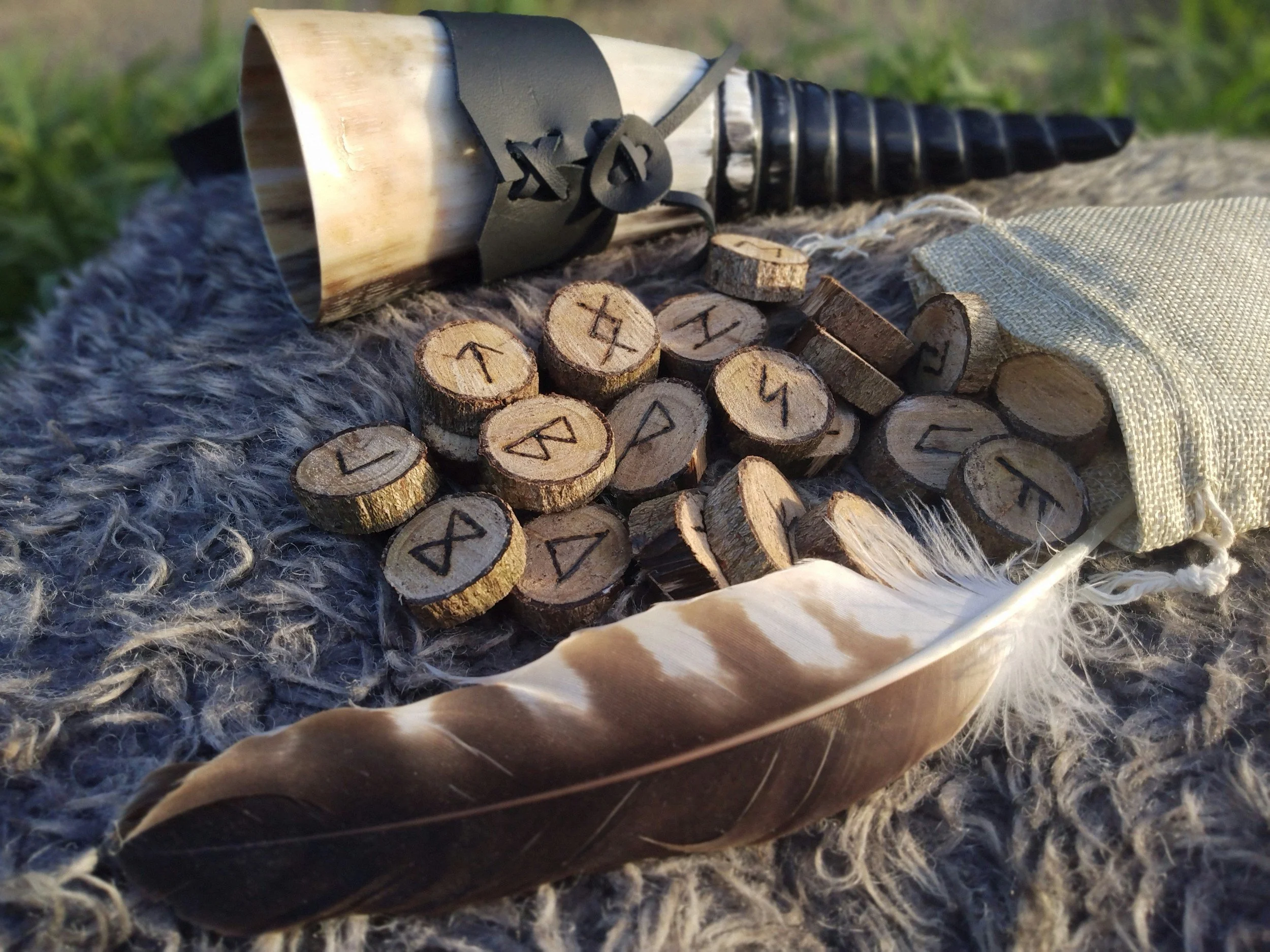
Runes occupy an important place in Gotland's cultural history. They were not an occasional or marginal system of signs, nor were they confined to the period we now call the Viking Age. They belonged to a much longer Scandinavian tradition, and on Gotland their presence can be traced across centuries of profound religious, linguistic, and cultural change.
One of the most important inscriptions in the history of runic writing was discovered on Gotland.
The Kylver Stone was found in 1903 during archaeological work at a farm near Stånga in southern Gotland. The stone had formed part of a grave dating to approximately the fifth century CE, several centuries before the beginning of the Viking Age. Inscribed on its surface is a sequence of the twenty-four characters of the Elder Futhark, the earliest major runic system. The Kylver inscription is generally regarded as the earliest known example preserving the complete Elder Futhark sequence.
Its importance extends far beyond Gotland. Because the inscription records the runes as a sequence rather than simply using individual characters to compose a message, it has played an important role in helping scholars understand the ordering and development of the early runic system. It is sometimes tempting to think of the Kylver Stone as a kind of Rosetta Stone for the runes—not because it translates one language into another, as the actual Rosetta Stone does, but because of the extraordinary importance of its complete futhark sequence to the study of early runic writing.
Its archaeological context is equally important. The Kylver inscription was not discovered as an alphabet written on a manuscript or preserved in a place of formal instruction. It was found in association with a grave. We cannot know with certainty what the complete futhark was intended to accomplish there, but its placement reminds us that early runes existed within a cultural world very different from the later manuscript culture through which we encounter much of medieval Scandinavian literature.
To understand that world, we need to resist interpreting runes solely through our modern understanding of writing. Long before the widespread adoption of the Latin alphabet in Scandinavia, runes existed within cultures in which an inscription could do more than record information. Runes were carved onto weapons, amulets, tools, personal objects, stones, bone, wood, and other materials, and some inscriptions appear to have been intended to protect, heal, strengthen, invoke, or otherwise affect the person or object with which they were associated.
The very language surrounding runes preserves something of their character. The Old Norse word rún carries meanings associated with secrecy, mystery, hidden knowledge, and confidential counsel, while the practice of making runes was expressed through the language of cutting and carving. Runes were not originally marks made casually with ink upon a page; they were signs deliberately cut into wood, bone, metal, stone, and other materials. In the older runic world, secrecy and carving therefore belong together: hidden or specialized knowledge given physical form through an intentional act of inscription.
The surviving Norse literary tradition remembers this dimension of runic knowledge very clearly. Runes are associated with protection, healing, victory, speech, childbirth, knowledge, and the ability to influence events. In the Poetic Edda, particularly in poems such as Sigrdrífumál and Hávamál, runic knowledge belongs to a world in which words and signs possess agency.
These texts require careful handling because the manuscripts in which they survive were written down in Christian medieval Scandinavia, centuries after some of the traditions they describe originated. They cannot simply be treated as instruction manuals for earlier runic practice. Yet the association between runes and ritual or magical purposes does not depend upon the literary sources alone. Archaeological finds include runic inscriptions on amulets and other objects in contexts scholars have interpreted as protective, healing, ritual, or magical.
Christianization did not bring Gotland's runic culture to an end. Instead, runes continued to be used within a changing religious and literate society. The Latin alphabet arrived with Christian institutions and manuscript culture, while runes remained familiar and continued to be carved. During the medieval period their surviving uses increasingly include the kinds of writing we readily recognize today: memorial inscriptions, names, prayers, ownership marks, messages, and other records of religious and everyday life.
The result is not a simple division between an early period of “magical runes” and a later period of “ordinary writing.” It is a long history of transformation. Runes could carry language, but carving could also be an intentional act performed for protection, remembrance, healing, invocation, or other purposes. As Gotland's religious and literary culture changed, the uses of runes changed with it, while the runic tradition itself continued.
Gotland provides another remarkable body of evidence for the imaginative world of Iron Age Scandinavia: its picture stones.
Hundreds of picture stones have been discovered on the island, spanning many centuries and several distinct styles. The great image stones of the later Iron Age are particularly striking. Some stand several meters tall, their surfaces organized into elaborate fields of imagery. Ships appear with sails spread across the stone. There are riders and horses, weapons, animals, serpentine forms, women greeting mounted figures with drinking vessels, and complex narrative scenes whose compositions have invited comparison with stories preserved centuries later in Old Norse literature.
These comparisons are important, but they require care. The picture stones were created before the medieval manuscripts containing the Poetic Edda, the Prose Edda, and many of the Norse sagas were written down. We cannot simply use those later texts as captions explaining every image carved into an earlier stone.
What the stones can demonstrate is that visual themes known from the wider Norse cultural world were already circulating long before surviving literary versions were committed to parchment. Some images have striking parallels with motifs and narrative episodes known from later Norse literature, giving us evidence that elements of those traditions have considerably older roots.
That makes the Gotland stones extraordinarily valuable. Medieval manuscripts preserve one form of cultural memory; the picture stones preserve another. The stories recorded by later writers did not suddenly appear when someone put pen to parchment. They belonged to cultures in which knowledge had long been transmitted orally, visually, musically, ritually, and through material objects.
Gotland also preserved a narrative tradition specifically concerned with the island itself.
The Gutasaga, written down in the Middle Ages and preserved together with the Gutalagen, or Law of the Gotlanders, tells of Gotland's legendary origins and early history. Its opening account describes the island as once sinking beneath the sea by night and rising again by day until a man named Tjelvar brought fire to it. The saga continues with stories of settlement, migration, agreements with the Swedish king, journeys beyond Gotland, conversion to Christianity, and the island's relationship with the wider world.
The Gutasaga is not a modern historical chronicle, nor should every episode be read as literal historical fact. It belongs to a different form of remembering, one in which origin stories, inherited traditions, political relationships, religious change, and collective identity are woven together. Yet its existence is significant. Gotland was not merely a location described by outsiders or a society that can now be reconstructed only through archaeology. Gotlanders also told stories about themselves: where they came from, how their island entered the human world, and how they understood their place in relation to other peoples.
Runes, picture stones, and the Gutasaga therefore give us three very different forms of cultural evidence. One preserves language and intentional signs through inscription. Another communicates through images carved into stone. The third preserves an island's remembered history through written narrative shaped by an older oral tradition.
Together they reveal something important about Gotland. This was a culture accustomed not only to movement and exchange, but also to marking, recording, depicting, remembering, and transmitting knowledge across generations.
That matters when we turn toward the labyrinths.
A stone labyrinth belongs to a different category of evidence than a runic inscription, a picture stone, or a written saga, and we should not pretend that one can simply be used to explain another. But all belong within a cultural landscape in which people repeatedly gave ideas physical form. They carved signs into objects and stone. They raised great stones bearing images and stories. They preserved narratives through oral tradition and eventually committed some of them to writing. And they arranged stones upon the earth to create paths that could be entered and walked.
The precise meanings of those paths must be considered on their own evidence. But the larger cultural context matters. Gotland's labyrinths belong to an island with an exceptionally long tradition of using language, image, story, stone, and intentional acts of making to carry knowledge and meaning from one generation to another.
Part III: Visby and Medieval Gotland
Medieval Visby: A Baltic Trading City
The maritime networks that connected Viking Age Gotland with the wider world continued to develop during the Middle Ages. On the island's western coast, Visby grew into one of the most important trading centers in the Baltic.
By the twelfth and thirteenth centuries, merchants from Gotland and abroad were conducting business there, and a substantial German merchant community had become established in the town. Visby became closely connected with the commercial network that developed into the Hanseatic League, linking it with trading cities throughout the Baltic and northern Europe.
The resulting prosperity transformed the town. Merchants constructed substantial stone houses and warehouses, ships moved through the harbor, and numerous churches and religious houses were built within the growing city. Visby became a place where people from different regions lived, worked, worshipped, and traded alongside one another. Goods arrived from distant markets, but so did languages, religious traditions, craftsmanship, architectural influences, customs, and ideas.
Much of that medieval city remains visible today.
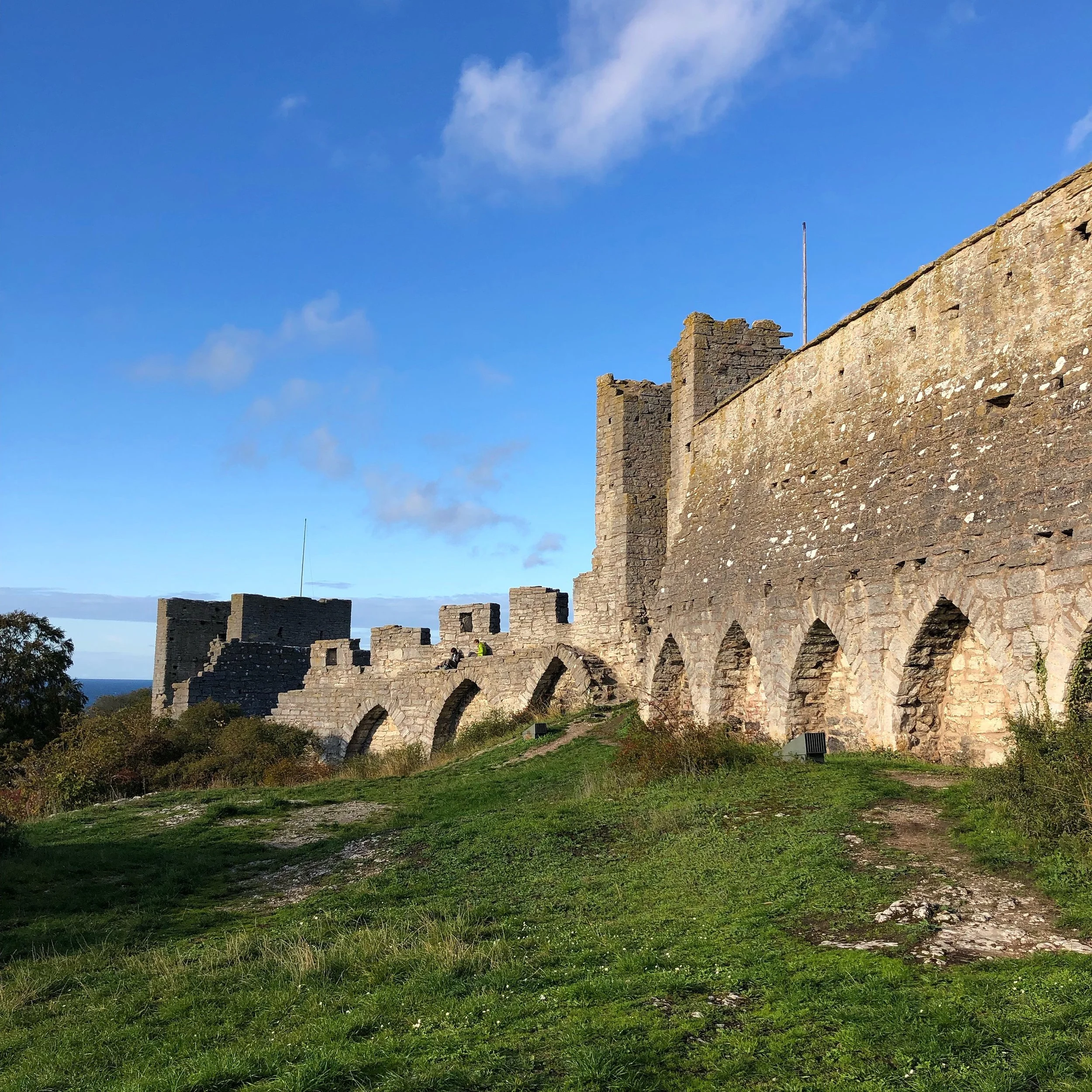
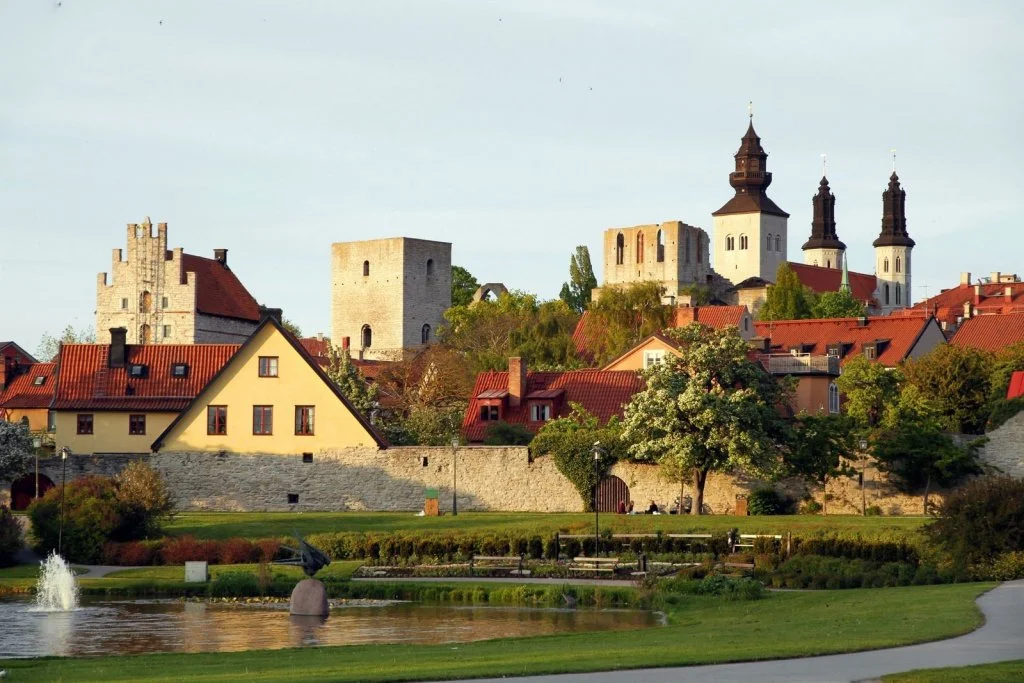
More than three kilometers of the medieval ringmur, or city wall, still surrounds the old town, its towers and gates forming one of the best-preserved medieval fortifications in northern Europe. Within the walls, medieval houses, warehouses, streets, churches, and church ruins remain integrated into the modern city.
The number of surviving church ruins is particularly striking. During Visby's prosperous medieval centuries, churches and religious houses served its growing population, religious orders, and international communities. Built largely from Gotland's limestone, they also reveal architectural influences circulating through medieval northern Europe. After Visby's commercial decline and the religious changes of the Reformation, many of these churches fell out of use. Their ruins—including St. Karin, St. Clemens, Drotten, St. Lars, and St. Nicolai—remain among the most distinctive features of the city, while the medieval St. Maria Cathedral continues in use.
In 1995, the Hanseatic Town of Visby was inscribed on the UNESCO World Heritage List in recognition of the exceptional preservation of this medieval trading city. Its significance lies not in a single monument but in the survival of the larger urban landscape: its street plan, merchant buildings, churches, ruins, and defensive wall.
Visby gives us another important piece of the Gotland story. The island's connections with the wider world did not belong to one brief period of Viking expansion. Across centuries, Gotland remained part of a Baltic world in which people, goods, knowledge, beliefs, artistic forms, and cultural practices continually crossed the sea.
That long history of exchange matters when we turn toward the labyrinths. The classical labyrinth was not unique to Gotland, yet the pattern became deeply rooted here. Understanding Gotland as a place of both strong local traditions and sustained contact with other cultures allows us to ask a more interesting question than simply where the labyrinth came from.
Part IV: The Labyrinths of Gotland
Gotland's Labyrinth Heritage
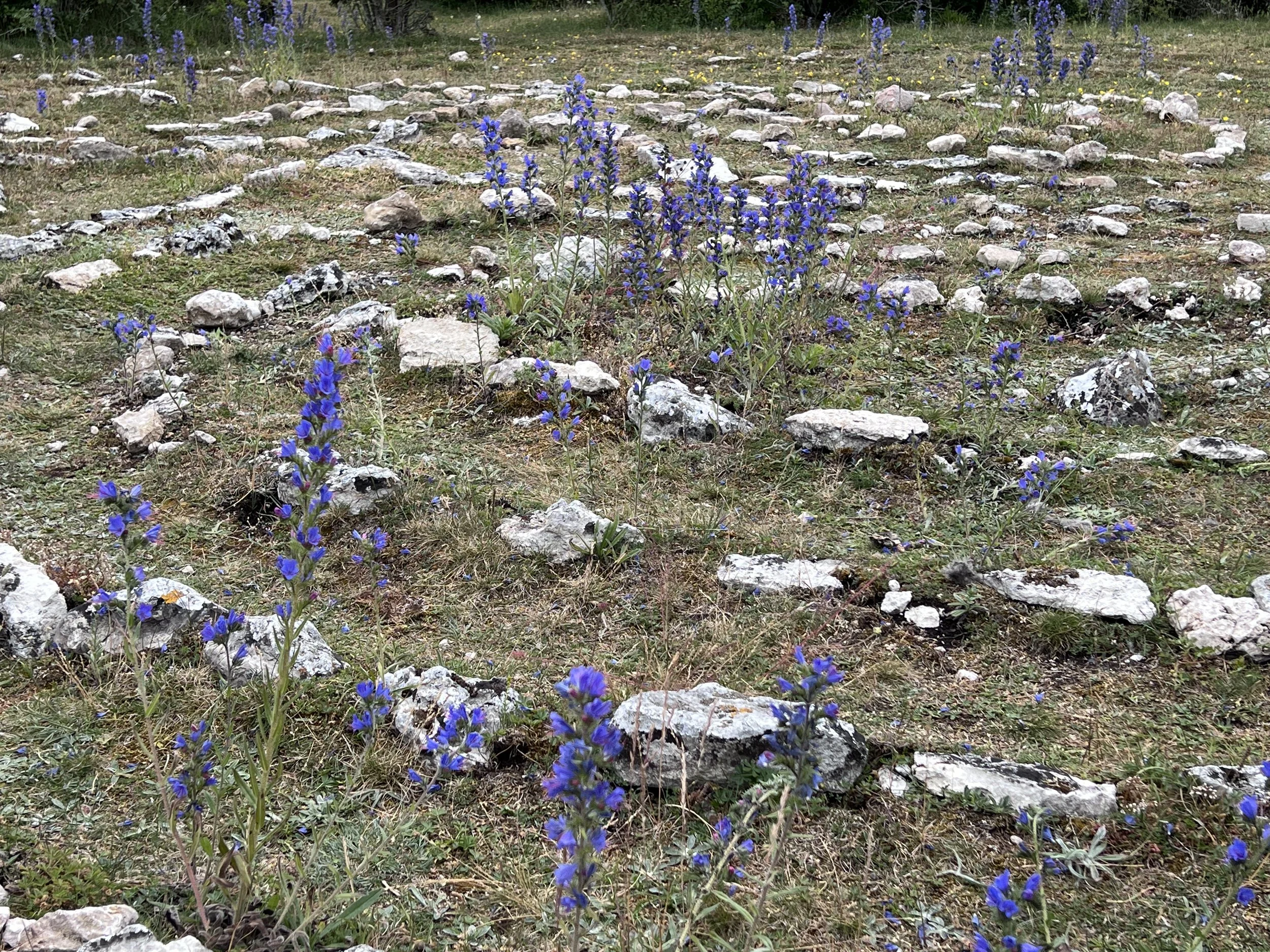
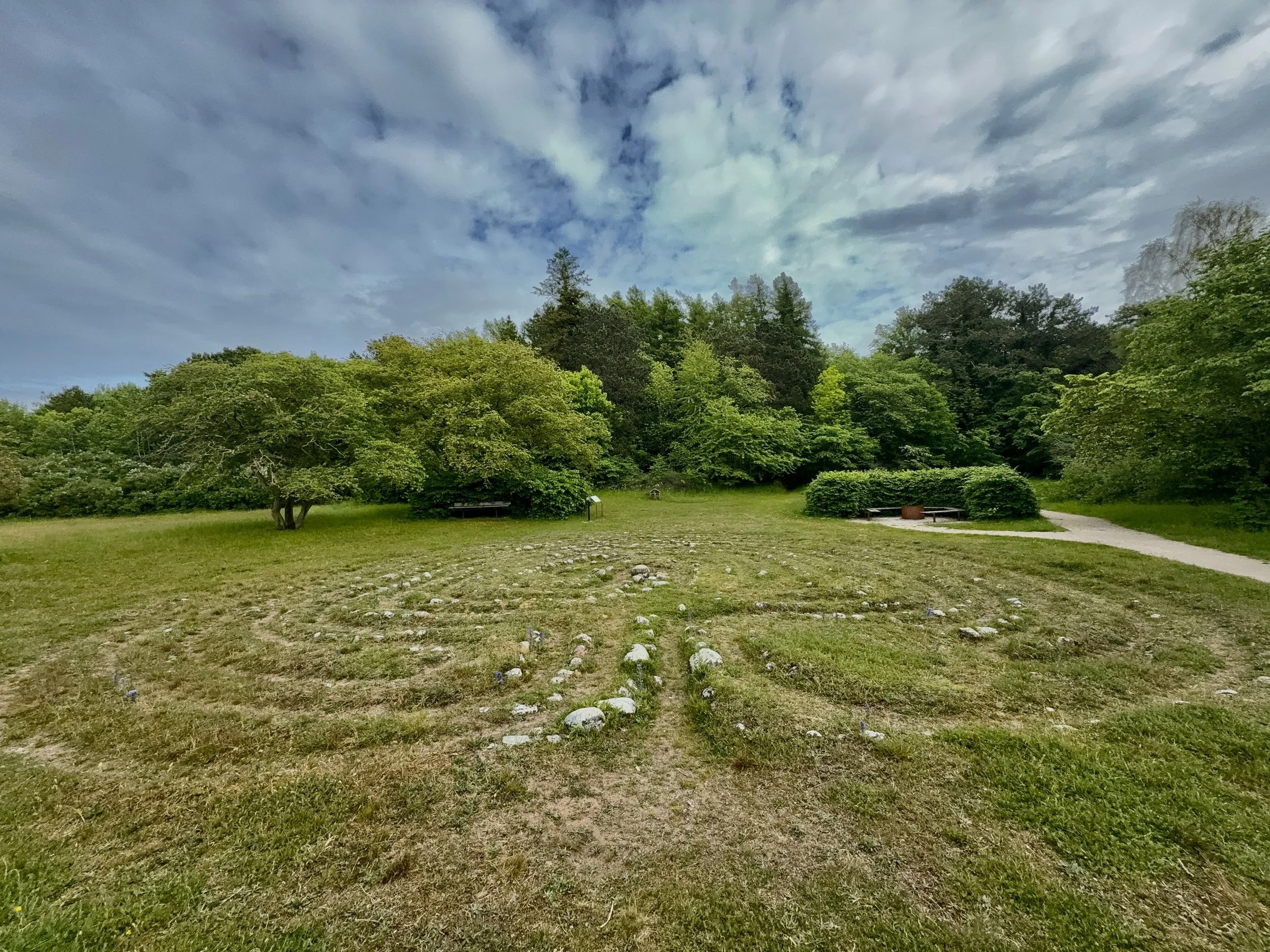
Gotland has an extraordinary concentration of labyrinths. Depending upon which records are consulted and what is counted, estimates range from around forty to as many as ninety. Some remain clearly visible and easily walkable, while others are slowly sinking back into the landscape.
In Sweden, these classical labyrinths have traditionally been called trojaborgar—Troy Towns or Troy Castles. The name connects them to a much wider European tradition in which labyrinths became associated with the legendary city of Troy. On Gotland, however, the pattern developed a particularly rich history of its own.
Gotland's labyrinths belong to five distinct periods of construction and use, the most recent extending into the twentieth and twenty-first centuries. Some of the oldest have been dated to the Bronze Age, while others were created within living memory. This is important because we are not looking at the remains of a single ancient practice. Generation after generation returned to the same pattern, sometimes preserving older labyrinths and sometimes creating new ones.
The labyrinth tradition is not confined to stone pathways laid upon the ground. The pattern also appears on Gotland's medieval church walls and in graveyards, including on memorial and grave stones. Some labyrinths were large enough to enter with the whole body. Others could be followed with the eye or traced with a finger. The pattern moved between landscape, community, church, and places of remembrance.
Determining the age of a stone labyrinth can be difficult. The stones themselves may be millions of years old; what we are trying to date is the moment when human hands arranged them into a pattern. Researchers therefore look for other evidence, including the surrounding archaeological context, historical records, how deeply stones have settled into the earth, weathering, vegetation, and lichen growth.
You can see these differences when you visit the labyrinths. Some announce themselves immediately, their pathways clearly defined and easy to follow. At older sites, the stones have settled into the earth. Lichens spread across their surfaces, grasses grow between them, and the pattern can be difficult to recognize until you know what you are looking for.
There is something moving about seeing an old labyrinth gradually returning to the land. It has not ceased to be a labyrinth simply because its stones are sinking into the earth.
Across vastly different periods of Gotland's history, people have continued to make, preserve, depict, and walk this same winding form: a single path turning inward toward a center and carrying the walker outward again.
Part V: Gotland Today
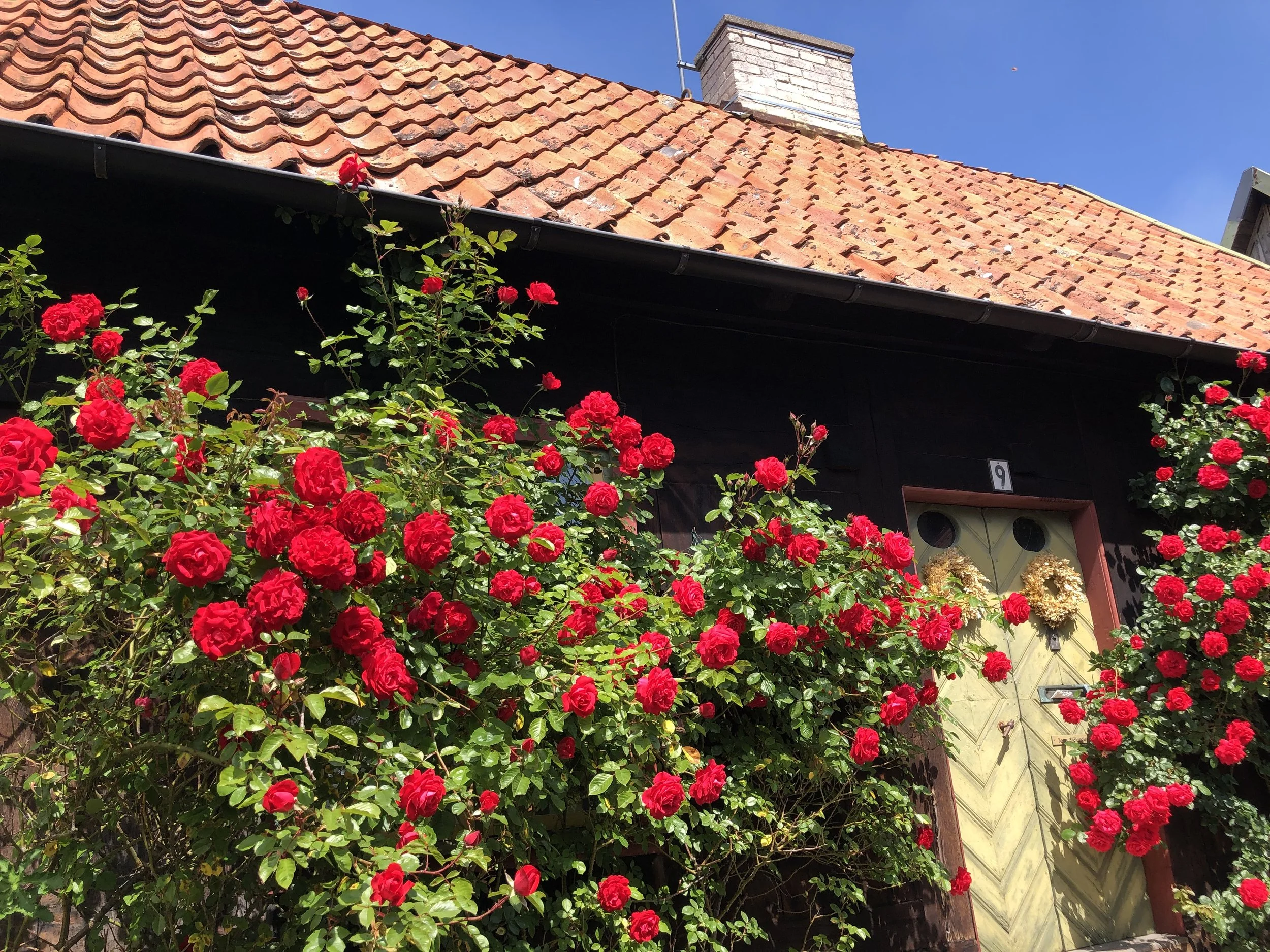
Gotland may carry thousands of years of history, but it is not an island suspended in the past. People continue to farm, fish, tend sheep, raise families, make art, gather for festivals, and live among the traces of those who came before them. Sheep and cows graze among ancient graves and burial places. Medieval churches remain at the centers of their parishes. Old stone walls divide working fields, and roads pass archaeological sites that have been part of the landscape for generations. The ancient and the everyday are not separate here.
This is one of the things I most want visitors to understand. Gotland's history is not contained within museums or archaeological sites. It remains visible throughout the living landscape: in the almost-hidden turn of a labyrinth beneath the grass, the carving on a picture stone, a medieval church still in use, or an ancient grave in a pasture. Once you begin to recognize these things, the island reveals layers that might otherwise be easy to pass by.
Gotland's natural and cultural landscapes are deeply intertwined. Coastlines, grazing lands, farms, fishing places, ancient monuments, villages, and living communities belong to the same landscape. The labyrinths belong here too,not simply as remnants of something that once existed, but as part of a pattern that people continued to recognize, use, and carry forward across generations.
There is a Swedish expression I love: God fortsättning—Good Continuation. To me, those words hold something essential about living tradition. We receive what has been carried to us, care for it while it is ours, and consider what we will pass onward. Gotland's labyrinths have been carried in this way for a very long time. May what is worth carrying continue.
Walk the Labyrinths With Us in 2027
In June 2027, my co-leader, Lars Howlett, and I will return to Gotland for our Gotland Midsummer Labyrinth Retreat, a small-group journey into the landscapes, traditions, stories, and ancient labyrinths of the island.
We will be there at Midsummer, when Gotland is filled with long northern light, wildflowers, music, celebration, and the extraordinary beauty of early summer in the Baltic.
If you are interested in joining us in 2027, please add your name to the Gotland Midsummer Labyrinth Retreat interest list.
This is especially important because we always open registration to the interest list first. Our Gotland retreats are intentionally kept small, and in the past we have often filled the available places during this early registration period.
Joining the interest list does not obligate you to attend. It simply means you will be among the first to receive the retreat details and the first invitation when registration opens.
